



The rapid expansion of blockchain technology and decentralized finance has created increasing demand for secure, fast, and reliable digital storage infrastructure. As blockchain networks continue processing massive amounts of transactional and encrypted data, storage performance has become a critical component of the crypto ecosystem.
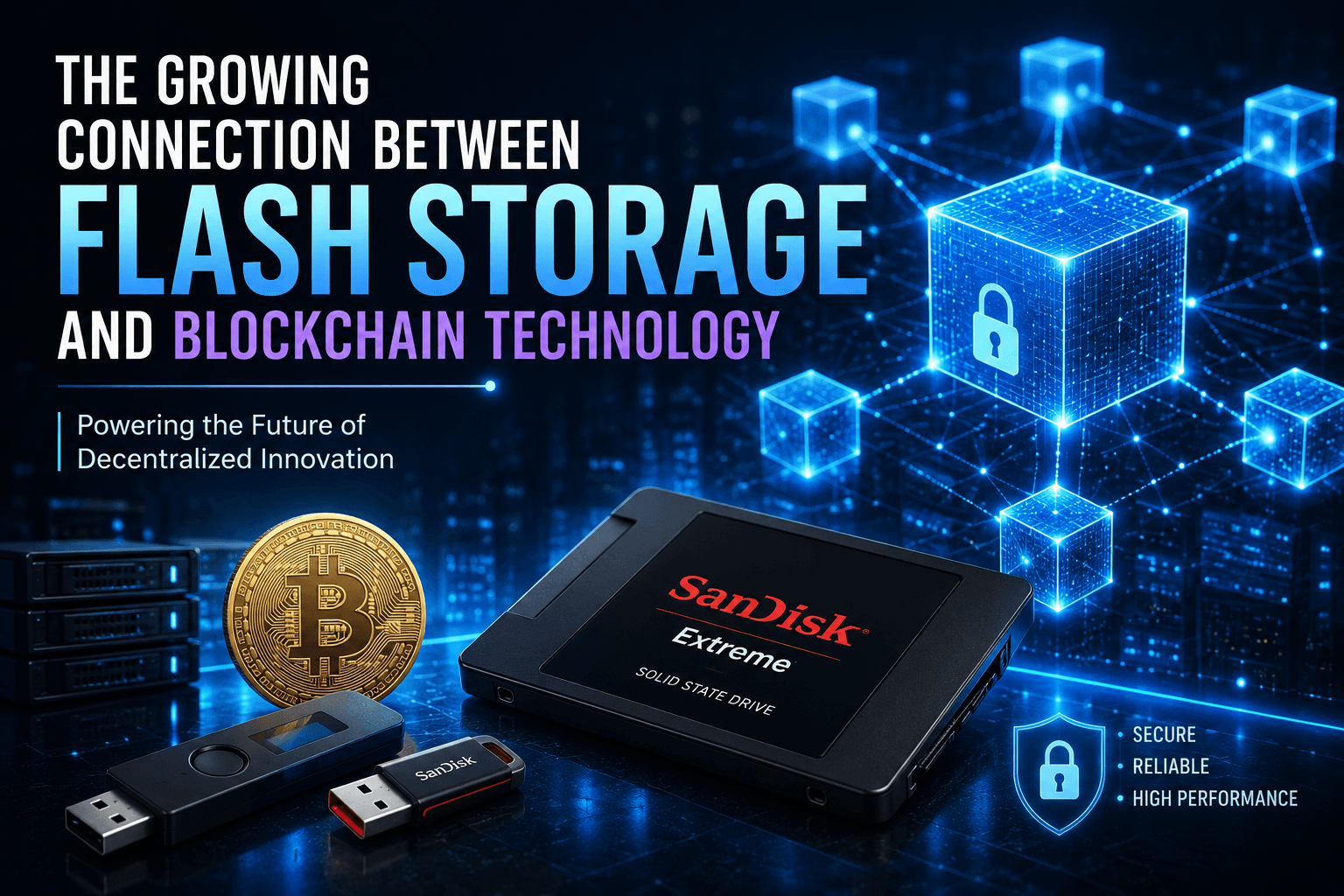
Flash storage solutions from companies like SanDisk are now widely used for crypto wallet backups, blockchain node storage, portable data transfers, and high-speed computing environments. SSD technology helps improve data access speeds while enhancing overall reliability for blockchain operations.
Insight: Blockchain relies on decentralized networks, but those networks still require fast and dependable storage infrastructure to function efficiently.
Table of Contents
1. Understanding Flash Storage and Blockchain2. Why Storage Matters in Crypto Infrastructure
3. Features of Flash Storage for Blockchain Systems
4. Real-World Blockchain Storage Use Cases
5. The Future of Storage in Web3 and Crypto
6. Final Verdict
Frequently Asked Questions (FAQ)
1. Understanding Flash Storage and Blockchain
Flash storage refers to high-speed solid-state storage technology commonly used in SSDs (Solid State Drives), USB flash drives, and portable memory devices. Unlike traditional hard disk drives (HDDs), flash storage delivers faster read and write speeds, improved durability, low latency storage performance, and enhanced reliability for modern computing and data-intensive applications.
Blockchain technology continuously records and verifies transactions across decentralized networks such as Bitcoin and Ethereum ecosystems. These distributed ledger systems generate large-scale databases that require efficient high-speed storage infrastructure capable of handling rapid data processing, node synchronization cryptographic verification, and real-time transaction validation.
As blockchain adoption and Web3 development continue to grow globally, high-performance flash storage solutions and SSD-based infrastructure are becoming increasingly important for maintaining network efficiency, improving decentralized data storage, enhancing crypto wallet security, and enabling scalable blockchain ecosystem performance.
2. Why Storage Matters in Crypto Infrastructure
Cryptocurrency ecosystems depend heavily on secure and high-performance data storage infrastructure for managing crypto wallets, transaction histories, blockchain ledgers, and decentralized applications (dApps). Reliable blockchain storage solutions are essential for maintaining data integrity, encryption security, and seamless access across distributed networks.
Fast SSD storage devices and flash-based storage systems significantly improve blockchain synchronization speeds, reduce network latency, and minimize delays during transaction validation and blockchain node operations. This results in faster performance for crypto trading platforms, decentralized finance (DeFi) applications, and full node processing.
- Faster blockchain node synchronization and improved distributed ledger performance
- Secure offline crypto wallet backups using encrypted flash storage devices
- Improved transaction data management for high-volume blockchain networks
- Reliable long-term digital asset storage and decentralized data preservation
This is why SSD and flash storage manufacturers have become indirectly connected to the expanding crypto industry.
3. Features of Flash Storage for Blockchain Systems
| Feature | Flash Storage Benefit | Blockchain Impact |
|---|---|---|
| High-Speed Data Access | Faster read/write operations | Quicker node synchronization |
| Portability | Easy offline backups | Secure crypto wallet storage |
| Durability | Lower risk of mechanical failure | Improved data reliability |
| Low Latency | Rapid data processing | Efficient blockchain operations |
| Energy Efficiency | Reduced power consumption | Better performance for mining systems |
Modern SSD technology has become an essential hardware component for many blockchain developers, crypto traders, and decentralized infrastructure operators.
4. Real-World Blockchain Storage Use Cases
Flash storage is commonly used for running full blockchain nodes, storing private wallet backups, and maintaining encrypted transaction databases.
Crypto traders and blockchain developers frequently use portable SSDs and USB storage devices to create offline backups of sensitive wallet information and recovery phrases.
Large-scale blockchain infrastructure providers also rely on high-speed storage arrays to process decentralized application data and network activity efficiently.
Key takeaway: Reliable flash storage improves blockchain performance, security, and accessibility across decentralized ecosystems.
5. The Future of Storage in Web3 and Crypto
As Web3 applications and decentralized technologies continue expanding, demand for high-performance storage infrastructure is expected to rise significantly.
- Blockchain databases are becoming larger and more complex.
- Crypto security increasingly depends on reliable offline storage solutions.
- Decentralized applications require faster infrastructure for scaling.
- SSD technology will likely remain essential for blockchain efficiency.
Although storage companies are not blockchain projects themselves, their technology plays an important supporting role within the broader crypto ecosystem.
6. Final Verdict
The connection between flash storage and blockchain technology continues growing as decentralized systems demand faster, more reliable infrastructure. Storage devices from companies like SanDisk help support secure crypto backups, blockchain synchronization, and decentralized data management.
While SanDisk itself is not a cryptocurrency project, its storage technology contributes to the operational efficiency of blockchain ecosystems and crypto-related applications.
As Web3 adoption expands globally, high-speed flash storage solutions will likely remain a foundational part of blockchain infrastructure and decentralized computing environments.
Frequently Asked Questions (FAQ)
Is SanDisk a cryptocurrency company?
No, SanDisk is a storage technology company that manufactures flash storage products such as SSDs and USB drives.
How is flash storage connected to blockchain technology?
Flash storage helps blockchain systems manage data faster, securely store wallet backups, and improve node synchronization performance.
Do blockchain nodes require SSD storage?
Many blockchain nodes perform more efficiently with SSD storage because of faster read and write speeds.
Can SSDs help improve crypto security?
Yes, SSDs and portable flash drives are commonly used for secure offline wallet backups and encrypted storage.
Will storage demand increase with Web3 growth?
Yes, expanding decentralized applications and blockchain networks are expected to increase demand for high-performance storage infrastructure.