



Summary
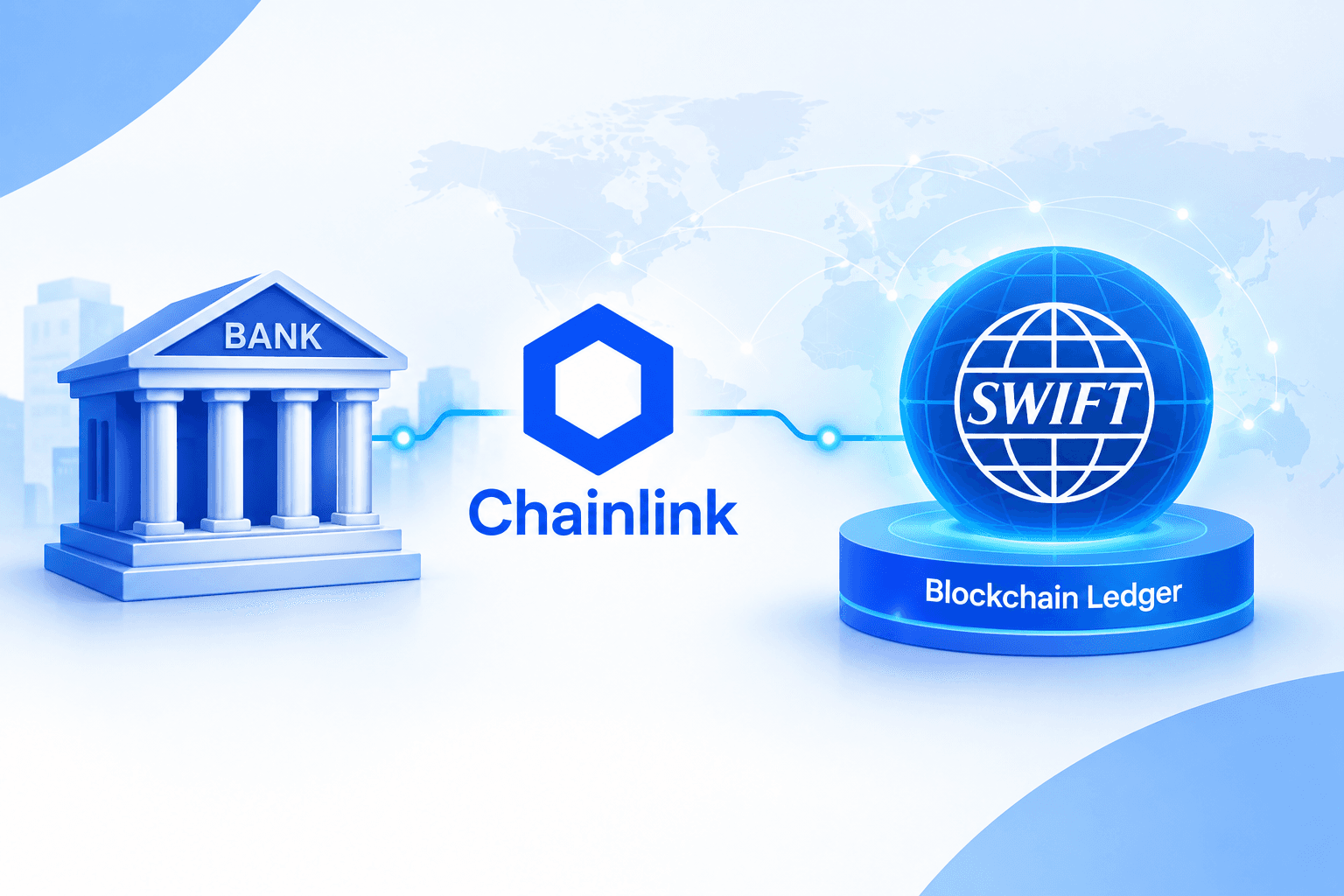
- Chainlink announced it is working to connect financial institutions’ systems and transaction-signing infrastructure to Swift’s blockchain ledger.
- The Chainlink Runtime Environment (CRE) coordinates workflows; banks retain control of the keys that authorize their transactions.
- Swift’s ledger coordinates payment activity using tokenized bank deposits. Final settlement remains on existing agreed systems.
- Swift reported that 17 banks were preparing to pilot live transactions. That does not mean all 17 are confirmed users of the Chainlink connection.
 Source: Chainlink Official X post
Chainlink’s Swift ledger access work is an interoperability initiative for banks that want to connect their existing systems with Swift’s shared ledger. The central idea is to coordinate activity across bank-operated infrastructure and the Swift ledger without transferring transaction-signing authority to Chainlink. The announced connection is being developed; the public announcement does not describe a universal rollout.
What did Chainlink announce about access to Swift’s ledger?
On September 28, 2026, Chainlink said it was working to enable financial institutions to connect their systems and key-signing infrastructure to Swift’s blockchain ledger through the Chainlink platform. The announcement describes an access and workflow layer, not a replacement for Swift or banks’ existing payment and settlement systems.
 Source: Connecting Financial Institutions
Key distinction: Chainlink’s release says it is working to enable these connections and that institutions will be able to use CRE for access. It does not name banks that have completed this specific integration or give a bank-by-bank activation schedule.
How do CRE, bank systems and Swift’s ledger fit together?
CRE is the workflow-orchestration environment in the announced model. Banks keep control of their transaction authorization keys, while CRE coordinates workflows that connect institutional systems to Swift’s ledger.
- Bank systems and ledgers: A bank’s tokenized deposits remain on its own ledger, and the bank retains its authorization keys.
- Chainlink CRE: CRE coordinates workflows connecting the institution’s systems with Swift’s ledger.
- Swift ledger: The shared ledger coordinates payment activity between participating financial institutions.
- Final settlement: Settlement continues through mechanisms agreed by the participating institutions, including existing real-time gross settlement systems where applicable.
This is a simplified explanation of the roles described in the public releases, not a technical transaction specification. The announcement does not publish a complete message sequence or deployment architecture for each bank.
| Component | Role in the described model | What it does not imply |
|---|---|---|
| Bank systems and ledgers | Hold bank-issued tokenized deposits and retain the institution’s transaction-authorization controls. | The deposits are not described as moving onto a Chainlink-owned ledger. |
| Chainlink CRE | Orchestrates workflows that connect financial institutions to Swift’s ledger. | CRE does not take control of banks’ authorization keys in the announced self-signing model. |
| Swift blockchain ledger | Provides a shared orchestration layer for tokenized-deposit payment activity between participating institutions. | It does not replace Swift’s global messaging role or, by itself, eliminate existing final-settlement arrangements. |
| Existing settlement mechanisms | Complete final settlement through arrangements agreed by the participating institutions. | A 24/7 payment workflow does not establish that every transfer is instantly final on the shared ledger. |
What moves on Swift’s ledger, and when is a payment settled?
The model uses tokenized deposits issued by banks and held on their own ledgers. Swift’s ledger coordinates the payment activity before final settlement; the published description does not say that the shared ledger replaces existing settlement systems.
Settlement caveat: “24/7” refers to the intended availability of payment workflows, including overnight and weekends. It should not be read as a promise that every payment is instantly or finally settled on-chain.
Swift describes its ledger as an orchestration layer for moving funds between participating institutions while preserving existing compliance, risk and control arrangements. Its July announcement says final settlement takes place through existing systems. Chainlink’s September release likewise says settlement continues through agreed mechanisms, such as real-time gross settlement systems.
Which 17 Banks Are Participating in Swift’s Blockchain Pilot?
Swift said on July 9, 2026 that its blockchain-based ledger was ready for initial use and that 17 banks from six continents were preparing to pilot live transactions using tokenized deposits. This is the Swift-ledger pilot cohort—not a published list of banks using Chainlink’s new connection.
 Source: Swift official Announcement for 17 Banks
The 17 banks named by Swift for the initial pilot were:
|
|
|
|
Do not conflate two figures: Swift says its wider network connects more than 11,500 financial institutions and corporates across more than 200 markets. That network-wide scale is not the same as the number of institutions participating in the ledger pilots or using the Chainlink connection.
What should readers avoid assuming about the integration?
The public material explains the intended roles and controls, but leaves important implementation details open. Treat the announcement as a connection initiative alongside a controlled Swift-ledger rollout—not evidence that every Swift member can already use it.
- The Chainlink announcement does not identify which banks will use CRE for this connection first.
- It does not provide a rollout timetable for the Chainlink integration across the Swift pilot cohort.
- It does not state that Chainlink replaces Swift, banks’ internal ledgers, or final-settlement systems.
- It does not promise a particular transaction speed, fee, or settlement outcome for every payment.
Frequently Asked Questions (FAQs)
Q: Is Chainlink replacing Swift?
A: No. The announcement describes CRE workflows connecting financial institutions to Swift’s ledger. Swift’s release says its role as a global financial messaging network remains in place.
Q: Does the Swift ledger hold the banks’ tokenized deposits?
A: Swift and Chainlink describe the deposits as remaining on bank-owned ledgers. Swift’s ledger coordinates payment activity between participating institutions.
Q: Does “24/7 payments” mean every transaction is final instantly?
A: No such guarantee is stated. The ledger coordinates activity before final settlement, which continues through agreed mechanisms.
Q: Are all 17 pilot banks confirmed to use Chainlink CRE?
A: The public announcement does not say that. Swift named 17 banks preparing to pilot the ledger, but no bank-by-bank CRE adoption list was published.
Q: Can every institution on Swift’s network access the ledger now?
A: The available releases do not establish that. Swift described an initial-use phase and a 17-bank pilot, while Chainlink said it is working to enable institutional connections.
Disclaimer: The information provided on this blog is for informational and educational purposes only and does not constitute financial, investment, legal, or tax advice. Cryptocurrency investments are highly volatile and carry a high risk of financial loss.