



With high-speed execution and advanced derivatives trading, the platform introduces a new dimension of opportunity — but also a new level of risk. To navigate this environment effectively, it is essential to understand what Hyperliquid outcomes are, how they occur, and why they matter for both beginner and experienced traders.
Table of Contents
1. What Are Hyperliquid Outcomes?2. Core Trading Outcomes
3. Real Trading Examples (With Numbers)
4. Hyperliquid vs Other Trading Platforms
5. Final Takeaways
Frequently Asked Questions (FAQ)
1. What Are Hyperliquid Outcomes?
Hyperliquid outcomes refer to the results traders experience when executing leveraged positions on the platform. These outcomes are primarily influenced by price movement, leverage, market liquidity, and execution speed.
Unlike traditional trading environments, even small market changes on Hyperliquid can produce amplified results due to leverage. This makes outcomes faster, more dynamic, and often more impactful.
2. Core Trading Outcomes
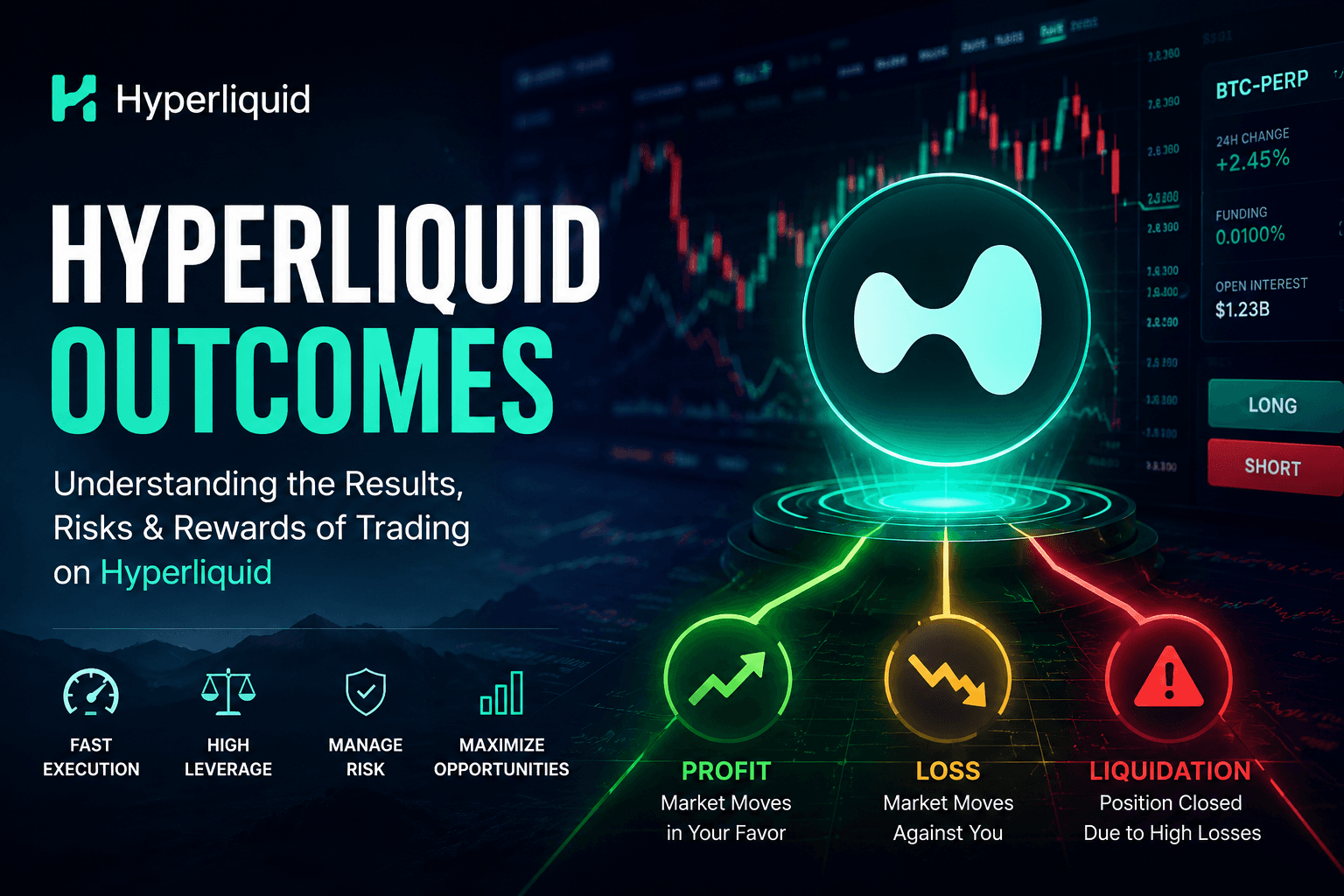
Every trade on Hyperliquid leads to one of three fundamental outcomes:
| Outcome | Description | Impact | Risk Level |
|---|---|---|---|
| Profit | Market moves in your favor | Positive returns | Medium |
| Loss | Market moves against your position | Capital reduction | Medium |
| Liquidation | Position automatically closed | Severe or total loss | Very High |
- A 5% price move on a 10x leveraged position results in roughly ±50% gain or loss.
- A 10% adverse move at 10x leverage leads to full liquidation.
- At 50x leverage, ~2% move can wipe out the position.
- Liquidation occurs when equity falls below maintenance margin.
Hard Truth: High leverage amplifies both profit and loss equally — but liquidation often comes faster than expected.
4. Hyperliquid vs Other Trading Platforms
To better understand Hyperliquid outcomes, it is useful to compare it with other trading platforms.
| Platform | Type | Execution Speed | Leverage | Best For |
|---|---|---|---|---|
| Hyperliquid | Decentralized (Order Book) | Very Fast | High | Advanced traders |
| Binance Futures | Centralized | Very Fast | High | Retail & professional traders |
| dYdX | Decentralized | Fast | Medium–High | DeFi traders |
| GMX | Decentralized (AMM) | Moderate | Medium | Low-slippage traders |
5. Final Takeaways
In leveraged trading environments, only a small percentage of traders remain consistently profitable. Hyperliquid processes billions in trading volume, increasing both opportunity and risk.
- Over-leverage increases liquidation risk
- Lack of stop-loss leads to major losses
- Emotional trading reduces success rate
Frequently Asked Questions (FAQ)
1. What are Hyperliquid outcomes in trading?
Hyperliquid outcomes refer to the possible results of a leveraged trade on the Hyperliquid platform, including profit, loss, or liquidation depending on market movement and leverage used.
2. Why is liquidation common in Hyperliquid trading?
Liquidation occurs because Hyperliquid uses high leverage, which amplifies both gains and losses. Even small price movements can trigger liquidation if margin requirements are not maintained.
3. How does leverage affect trading outcomes on Hyperliquid?
Leverage increases exposure to market movements. For example, a 10x leverage means a 5% price change results in approximately a 50% profit or loss.
4. Is Hyperliquid better than centralized exchanges like Binance Futures?
Hyperliquid offers decentralized order-book trading with fast execution, while centralized platforms like Binance Futures provide higher liquidity and more beginner-friendly tools. The choice depends on trader experience and risk preference.
5. What is the biggest risk when trading on Hyperliquid?
The biggest risk is liquidation due to high leverage and rapid market volatility. Without proper risk management, traders can lose their entire margin quickly.