



As of July 8, 2026
Introduction
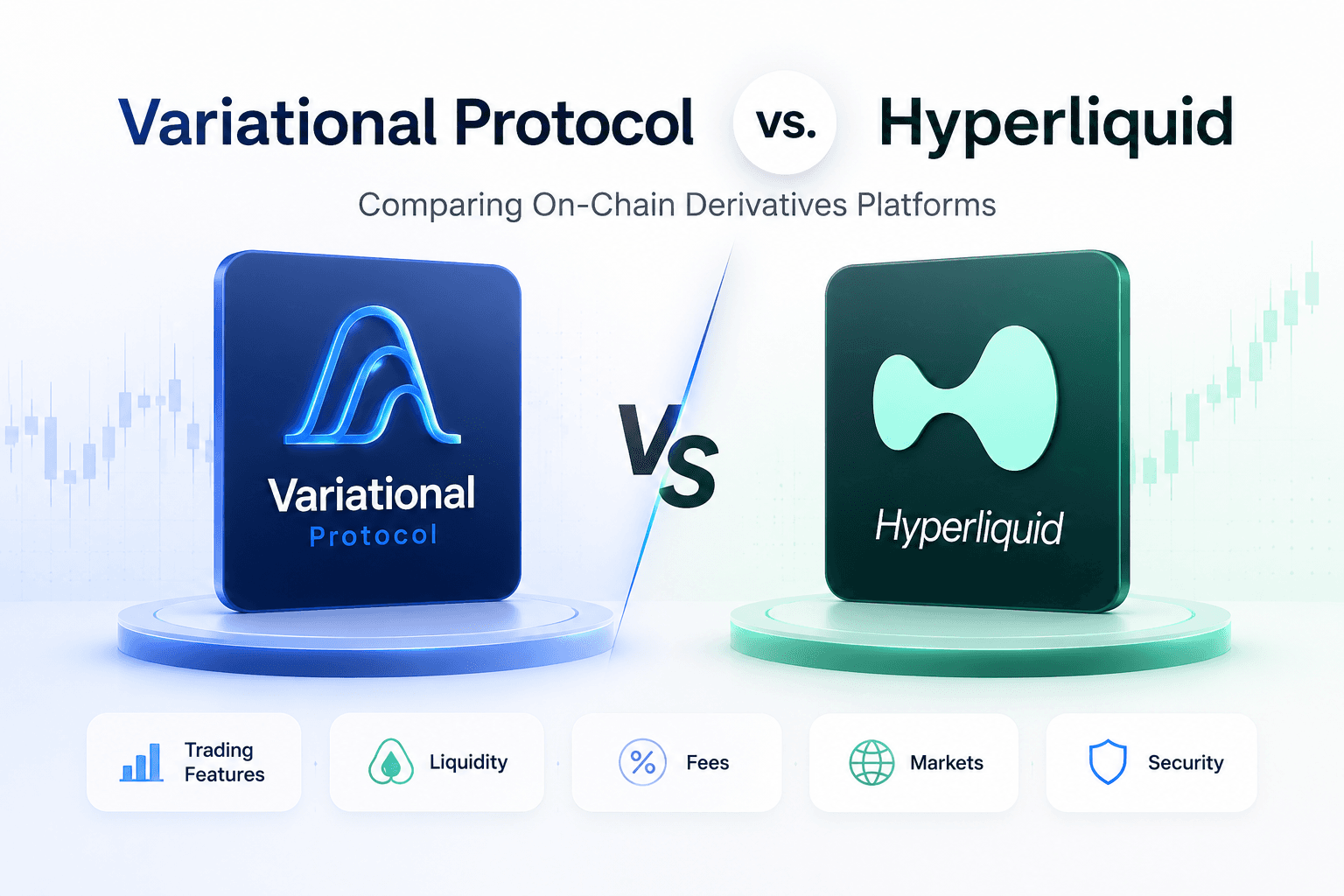
Variational Protocol and Hyperliquid are two leading DeFi derivatives platforms, each taking a different approach to on-chain trading. While both support perpetual markets, they differ in architecture, liquidity, fees, and trading experience. This comparison highlights their key differences to help you understand which protocol best fits your trading needs.
Key Differences at a Glance
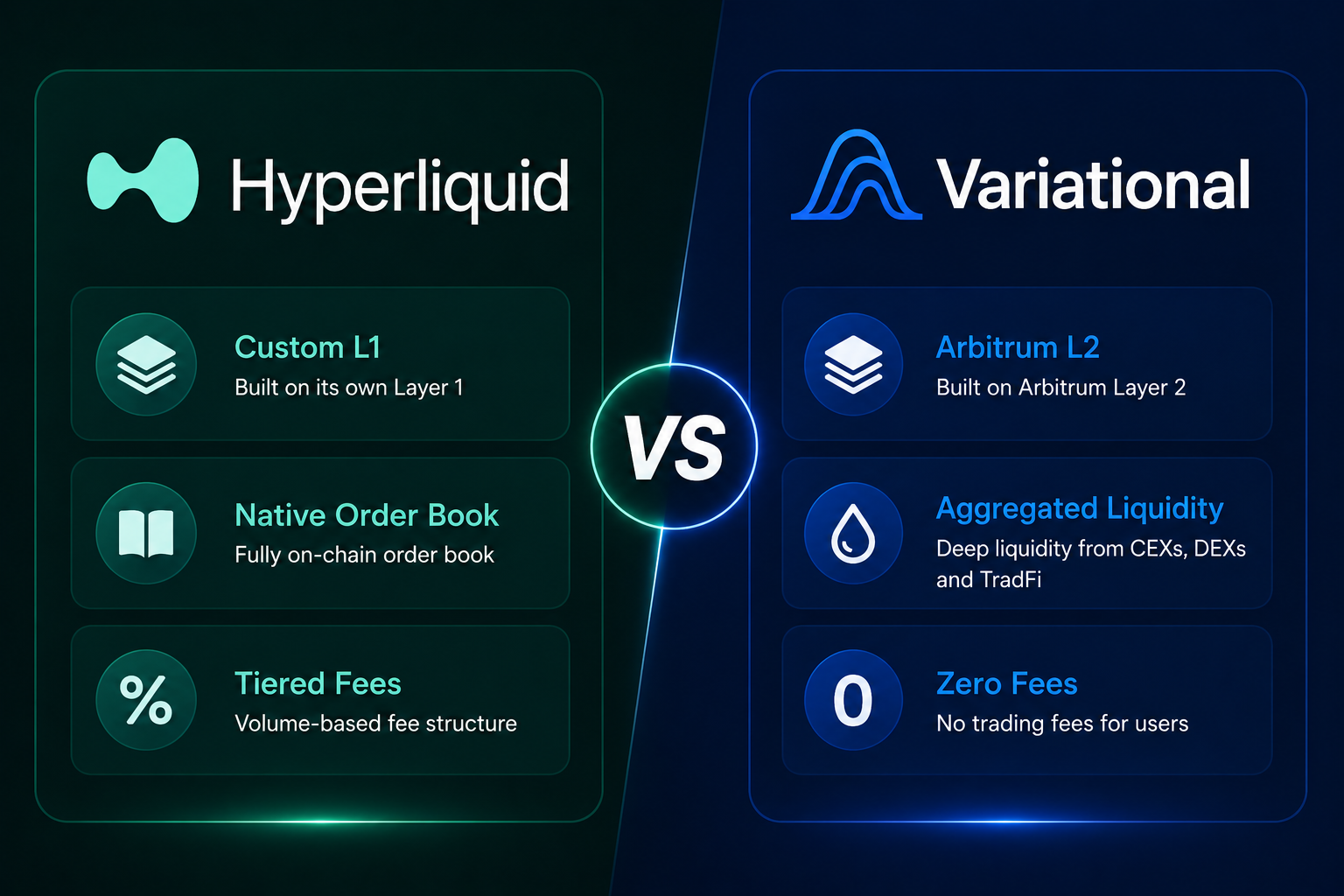
- Architectural Foundation: Variational operates as a protocol on Arbitrum One (L2), while Hyperliquid is a custom-built Layer 1 blockchain.
- Liquidity Provision: Variational aggregates external liquidity from diverse sources (CEXs, DEXs, TradFi), whereas Hyperliquid relies on a native Central Limit Order Book (CLOB) on its L1.
- Fee Philosophy: Variational's Omni offers zero maker/taker fees, contrasting with Hyperliquid's tiered fee structure based on trading volume.
Before diving into their comparison, you may first want to understand what is Variational Protocol.
Architectural Foundations: L1 vs. L2 Protocol
One of the most fundamental differences between Variational Protocol and Hyperliquid lies in their architectural design. This choice dictates their performance characteristics, scalability, and integration capabilities.
-
Variational Protocol: Protocol on Arbitrum One (L2)
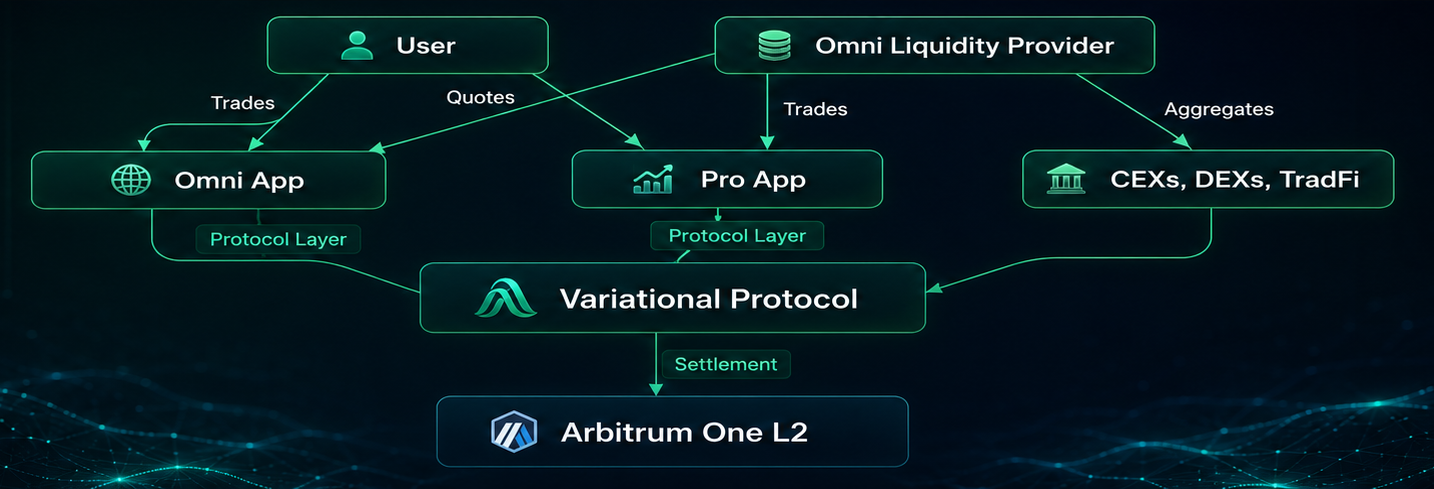
Variational Protocol runs on Arbitrum One, leveraging Ethereum's security with lower fees and faster transactions. Its architecture is designed to automate the full lifecycle of on-chain derivatives trading.
-
Hyperliquid: Custom Layer 1 Blockchain
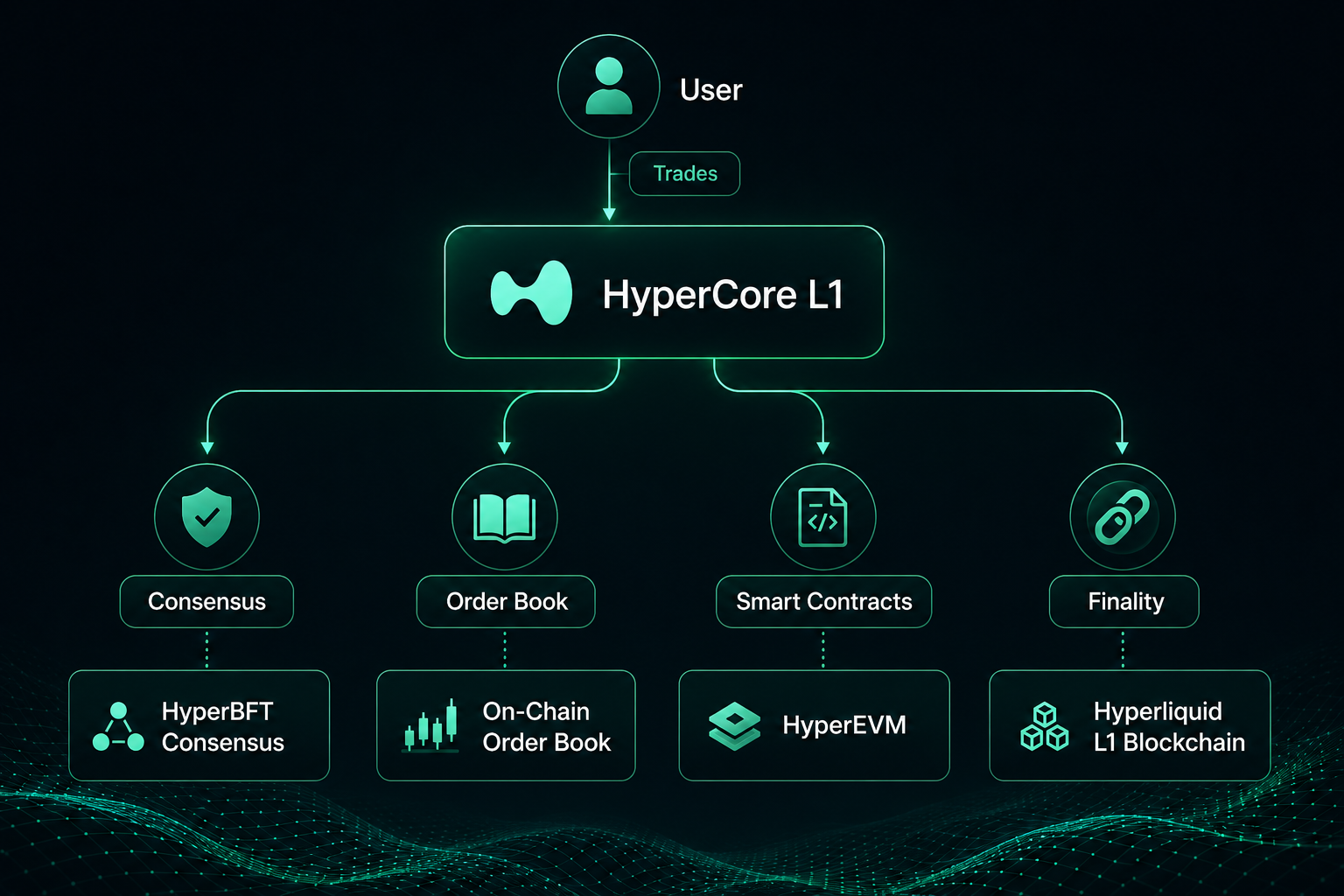
Hyperliquid is a purpose-built Layer 1 blockchain powered by the HyperBFT consensus mechanism. It delivers one-block finality and high throughput, supporting up to 200,000 orders per second for fully on-chain trading.
Liquidity Models: Aggregation vs. Native Order Book
The approach to liquidity provision is another key differentiator, impacting market depth, asset availability, and trading mechanisms.
-
Variational Protocol: RFQ-Based Liquidity
Variational Protocol uses a Request-for-Quote (RFQ) model that aggregates liquidity from CEXs, DEXs, and other sources through its Omni Liquidity Provider (OLP), offering deep liquidity across multiple assets.
-
Hyperliquid: Native On-Chain CLOB
Hyperliquid uses a native on-chain Central Limit Order Book (CLOB), enabling transparent order matching, fast execution, and efficient price discovery with one-block finality.
Fee Structures: Zero-Fee vs. Tiered System
The cost of trading is a critical factor for users, and both protocols have distinct models.
-
Variational Protocol (Omni): Zero Trading Fees
Variational Protocol offers zero maker and taker fees by using its integrated Omni Liquidity Provider (OLP), reducing trading costs for active traders and market makers.
-
Hyperliquid: Tiered Fees & Staking Discounts
Hyperliquid uses a 14-day volume-based fee system. Higher trading volume lowers maker and taker fees, with maker rebates at higher tiers. Staking HYPE unlocks additional fee discounts.
| Hyperliquid Tier | 14d Weighted Volume ($) | Taker Fee (Base Rate) | Maker Fee (Base Rate) |
|---|---|---|---|
| 0 | < 5M | 0.045% | 0.015% |
| 1 | ≥ 5M | 0.040% | 0.012% |
| 2 | ≥ 25M | 0.035% | 0.008% |
| 3 | ≥ 100M | 0.030% | 0.004% |
| 4 | ≥ 500M | 0.028% | 0.000% |
| 5 | ≥ 2B | 0.026% | 0.000% |
| 6 | ≥ 7B | 0.024% | 0.000% |
Market Scope and Target Audience
Variational Protocol and Hyperliquid target different segments of the derivatives market, with distinct strengths and use cases.
-
Variational Protocol: Multi-Asset & Institutional Focus
Variational supports crypto and real-world asset (RWA) markets, including OTC derivatives, making it well-suited for advanced and institutional traders.
-
Hyperliquid: Crypto-Native Trading
Hyperliquid focuses on high-speed crypto perpetuals and spot trading, while HyperEVM enables developers to build DeFi applications on its Layer 1 ecosystem.
Comparative Summary
To summarize the key distinctions, the image below provides a side-by-side comparison of Variational Protocol and Hyperliquid.
Conclusion
The better choice depends on user priorities: Variational suits traders seeking diverse markets and integrated liquidity, whereas Hyperliquid is ideal for those prioritizing speed, transparency, and a fully on-chain trading environment.
Frequently Asked Questions (FAQs)
1. How do Variational Protocol and Hyperliquid differ in their liquidity models?
Variational aggregates liquidity from CEXs, DEXs, and TradFi dealers through its RFQ-based architecture, while Hyperliquid relies on its native on-chain central limit order book (CLOB) for price discovery and execution.
2. Which platform is better suited for institutional derivatives trading?
Variational is designed with institutional use cases in mind through Pro, offering customizable settlement and OTC infrastructure. Hyperliquid primarily focuses on delivering a high-performance on-chain trading experience for crypto derivatives.
3. How do the underlying architectures of Variational Protocol and Hyperliquid impact trading?
Hyperliquid achieves low latency using its custom Layer 1 blockchain, whereas Variational leverages Arbitrum One and external liquidity aggregation to provide broader market access and efficient on-chain settlement.