
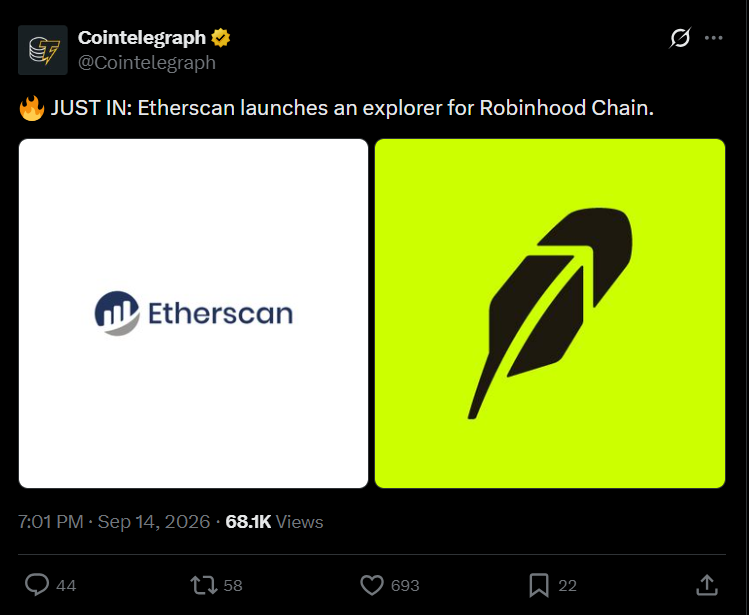
 Source: Cointelegraph X post
Summary
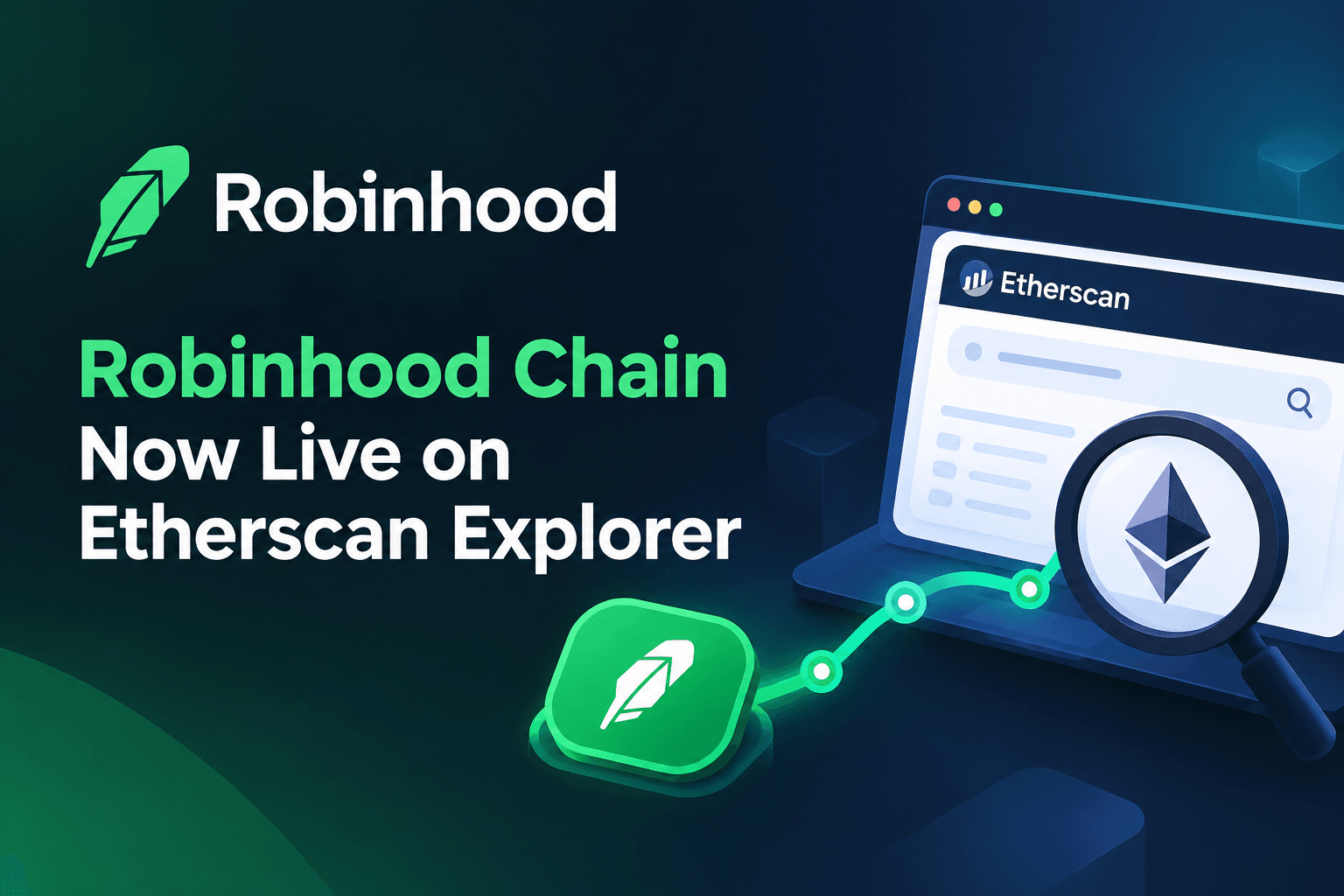
- RobinScan is live: Etherscan’s Robinhood Chain explorer is accessible at robin.etherscan.io.
- What it does: users can search Robinhood Chain blocks, transactions, addresses, tokens, contracts, and L1-to-L2 activity through an Etherscan-style interface.
- What the chain is: Robinhood describes it as a permissionless, Ethereum-compatible Layer 2 built for financial services and real-world assets.
- Important distinction: Robinhood’s current developer documentation still lists Blockscout as the documented block explorer, so RobinScan should be treated as an additional live explorer unless Robinhood publishes a replacement notice.
What exactly is now live?
The confirmed change is the availability of an Etherscan-powered explorer for Robinhood Chain. The live site is titled “Robinhood Chain Explorer,” labels itself “RobinScan,” exposes standard explorer functions, and identifies itself as built by Team Etherscan.
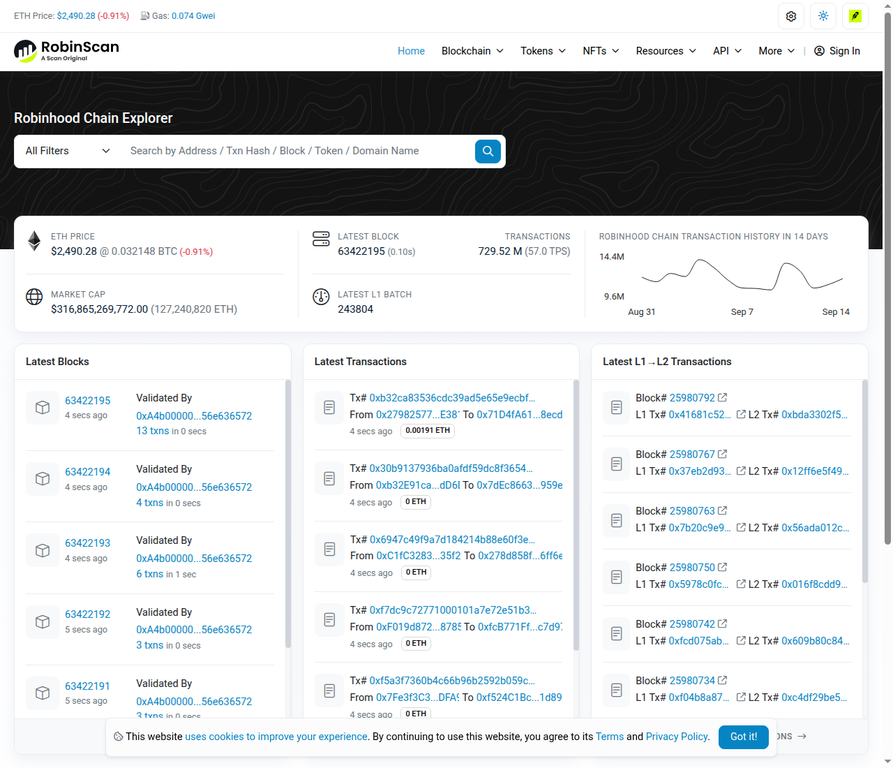 Source: Robinscan.io
This is not the same thing as saying that Robinhood Chain has become Ethereum mainnet. Robinhood Chain remains its own Layer 2 network with its own chain ID and network endpoints. Etherscan is providing the discovery and analytics interface for that network.
How does RobinScan compare with the documented Blockscout explorer?
Both interfaces can expose onchain data, but they are different explorer products. Robinhood’s official connection documentation currently names Blockscout as the mainnet block explorer, while the live Etherscan site separately operates RobinScan.
| Point of comparison | RobinScan | Blockscout |
|---|---|---|
| Current status verified | Live at robin.etherscan.io; footer identifies it as built by Team Etherscan. | Listed in Robinhood’s official developer documentation as the mainnet block explorer. |
| Primary role | Etherscan-style search, analytics, blocks, transactions, tokens, contracts, and L1-to-L2 views. | Officially documented explorer endpoint for inspecting Robinhood Chain activity. |
| Network identity | Robinhood Chain Mainnet; chain ID 4663. | Robinhood Chain Mainnet; chain ID 4663. |
| What it does not mean | It does not make Robinhood Chain identical to Ethereum mainnet. | It does not imply that every similarly named token is canonical. |
Which network details should users verify before connecting?
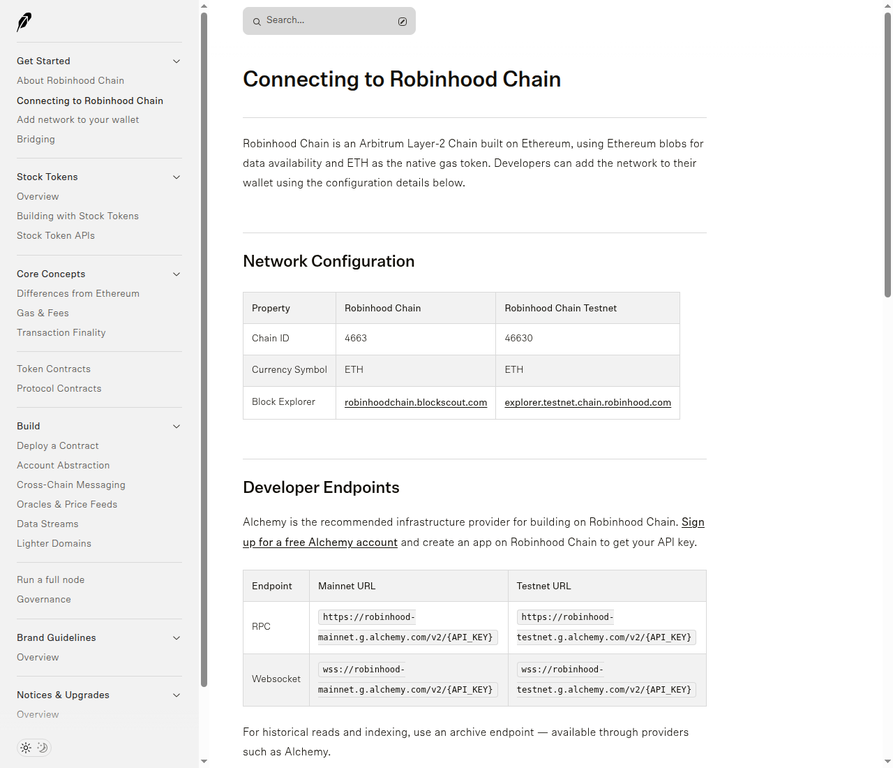
Users should match the network parameters, not just the brand name. Robinhood’s official documentation gives the following mainnet configuration.
- 1. NetworkRobinhood Chain Mainnet
- 2. Chain ID4663
- 3. Gas assetETH
| Configuration | Official mainnet value |
|---|---|
| Network name | Robinhood Chain |
| Chain ID | 4663 |
| Currency symbol | ETH |
| Public RPC | https://rpc.mainnet.chain.robinhood.com |
| Documented explorer | robinhoodchain.blockscout.com |
Safety check: never select a network or token solely because it uses the Robinhood name. Verify the chain ID, use the official documentation for network details, and use Robinhood’s published contract list to identify canonical token contracts.
What can readers use RobinScan to verify?
RobinScan is most useful as a public inspection layer. A reader can independently review whether a transaction was submitted, inspect an address’s activity, check contract interactions, and follow activity between Ethereum and Robinhood Chain where the explorer displays the relevant records.
- Search by address, transaction hash, block, token, or domain name.
- Inspect latest blocks and transactions on Robinhood Chain.
- Review token and contract pages rather than relying on screenshots or social posts.
- Use the explorer as a first verification step, then cross-check asset details against Robinhood’s official contract documentation.
What should users not assume from the launch?
The explorer launch is an infrastructure and transparency update, not an investment endorsement. A visible token or contract is not automatically safe, liquid, authorized, or suitable for a particular jurisdiction.
Reader takeaway: use RobinScan to inspect facts that are recorded onchain; use Robinhood’s legal and product documentation to understand what an asset represents, who can access it, and what restrictions apply.
Frequently Asked Questions
Q: Is Robinhood Chain the same as Ethereum?
A: No. Robinhood Chain is a separate Ethereum Layer 2. Its official documentation lists chain ID 4663 and ETH as its native gas currency.
Q: What is the official Etherscan explorer URL?
A: The live Etherscan-powered explorer checked for this article is https://robin.etherscan.io/, branded as RobinScan.
Q: Does RobinScan replace Blockscout?
A: That replacement has not been established by the primary sources checked. Robinhood’s current developer documentation still lists Blockscout as the mainnet block explorer, so readers should recognize both endpoints and follow future official updates.
Q: What token pays transaction fees?
A: ETH pays transaction fees on Robinhood Chain, according to Robinhood’s official support and developer documentation.
Q: Where can I find canonical Robinhood Chain token contracts?
A: Use Robinhood’s official Token Contracts documentation. Robinhood warns that a matching name or ticker with a different contract address is not necessarily a Robinhood Stock Token.
Disclaimer: All content on this blog is for informational purposes only and does not constitute financial advice. Cryptocurrency trading carries a high level of risk and volatility. Always do your own research before investing; the author is not liable for any financial losses.