



Pons is a token launch platform on Robinhood Chain. In Pons V2, a new token first trades on a bonding curve. When the curve is complete, the token moves to a Uniswap V4 pool. Pons says the pool’s liquidity is locked and that it does not hold users’ tokens or funds. As of October 20, 2026, Pons’s documentation said only approved wallet addresses could create tokens and that no V2 audit had been completed.
| Topic | What Pons V2 documentation said on October 20, 2026 |
|---|---|
| Launch process | Trading starts on a bonding curve and moves to a Uniswap V4 pool at graduation. |
| Liquidity | Pons says the pool position is locked permanently. |
| Fees | A launch fee and trading fee apply; a creator may also set an extra tax. Check each launch’s terms. |
| Who can launch | Public launches were closed; only approved addresses could create tokens. |
| Audit status | The documentation said no V2 audit had been completed and advised treating V2 as unaudited. |
Launch access, fees and audit status can change. Check the current official documentation before using the app. Pons V2
What Is the Pons Launchpad on Robinhood Chain?
A token launch platform lets a creator make a token and start trading it. Pons runs on Robinhood Chain. Robinhood describes its network as an Ethereum-compatible Layer 2, a network built to work with Ethereum while handling transactions separately.
Pons V2 uses a bonding curve first, then a Uniswap V4 pool. A pool is a place where people can trade tokens. Pons says users sign transactions with their own wallets and that Pons does not hold their tokens or funds.
How Does the Pons Launchpad Work?
A creator chooses the token’s name and other details, a launch setting, and an approved trading pair. A trading pair is the token being launched and the asset used to buy or sell it. Pons says the launch setting determines matters such as token supply, trading fees and the point when the token graduates.
The token supply is placed in the bonding curve. People can buy or sell against it. When the curve is complete, the system creates a Uniswap V4 pool and trading continues there.
What Changed in Pons V2?
Pons’s V1 guide describes tokens that started in a Uniswap V3 pool paired with WETH. Pons’s V2 guide describes a different process: trading starts on a bonding curve, then moves to a Uniswap V4 pool after graduation.
This means details from an older V1 article may not apply to V2. Check the version and token contract before relying on older information about fees, supply or liquidity. Pons V2
What Does Pons Graduation Mean?
Graduation is when a token stops trading on its bonding curve and moves to a Uniswap V4 pool. Pons says this usually happens when the curve is sold out. The launch settings determine the required amount, so there is not one threshold for every token or trading pair.
A Bitquery technical guide also describes different thresholds for ETH and other approved tokens. Check the token’s own launch information for its threshold. Graduation means the launch reached its set point; it does not mean that the token has been reviewed or is safe.
How Does the Pons Bonding Curve Work?
A bonding curve is a set of pricing rules in a smart contract. Pons says the price rises as people buy and falls as people sell. The price can change while a trade is being made, so a large order may get a different average price from a small one.
A bonding curve does not promise a certain price or a profit. The token’s launch settings and available supply affect each trade. Pons’s technical guide says a final buy may be limited to the tokens left on the curve, with unused payment returned.
Does Pons Lock Liquidity?
Pons says the Uniswap V4 pool position created at graduation is locked permanently. In simple terms, the creator and Pons cannot withdraw that locked position.
A lock does not keep a token’s price from falling. It does not promise that a buyer can sell at a profit or at a chosen price. Pons warns that launch tokens can lose all their value.
Which Trading Pairs Does Pons V2 Support?
A trading pair uses the token being launched and another asset for buying and selling. Pons says a launch may use ETH or another asset that Pons has approved. The approved asset cannot be changed after the launch begins.
If the paired asset loses value or becomes hard to trade, that can affect the launch too. The approved list may change, so check the pair shown for the token you are considering.
What Fees Does Pons Charge?
Pons’s V2 guide describes a launch fee and a standard trading fee. A creator may also add an extra trading tax. Pons says that this tax is optional, limited by a protocol cap and cannot be raised after the token launches.
Fees and other terms can differ by launch. Check the token’s terms and the amounts shown in your wallet before you approve a transaction. Do not assume a fee listed for an older V1 token applies to V2.
What Is the PONS Token?
A token with the letters “PONS” in its name is not automatically an official token of the Pons launchpad. The Pons V2 documentation reviewed for this article explains how its launch system works, but does not establish that a separate token with the PONS ticker is an official protocol token.
Bitquery’s independent review reported that a token named PONS appeared on Robinhood Chain before the first launch it linked to the Pons platform, and that the token was not in the launch platform’s token records. Bitquery also said the chain data could not show whether the same people were behind both. That relationship remains unconfirmed by the evidence reviewed here. Check the exact contract address and look for a current official statement before describing the token as an official Pons asset.
How Do PONS Buybacks and Burns Work?
Pons’s V2 guide describes an optional feature for each launched token: its creator may use part of the creator’s fees to buy that same token. The buyback comes from the creator’s share, not from an extra fee charged to traders.
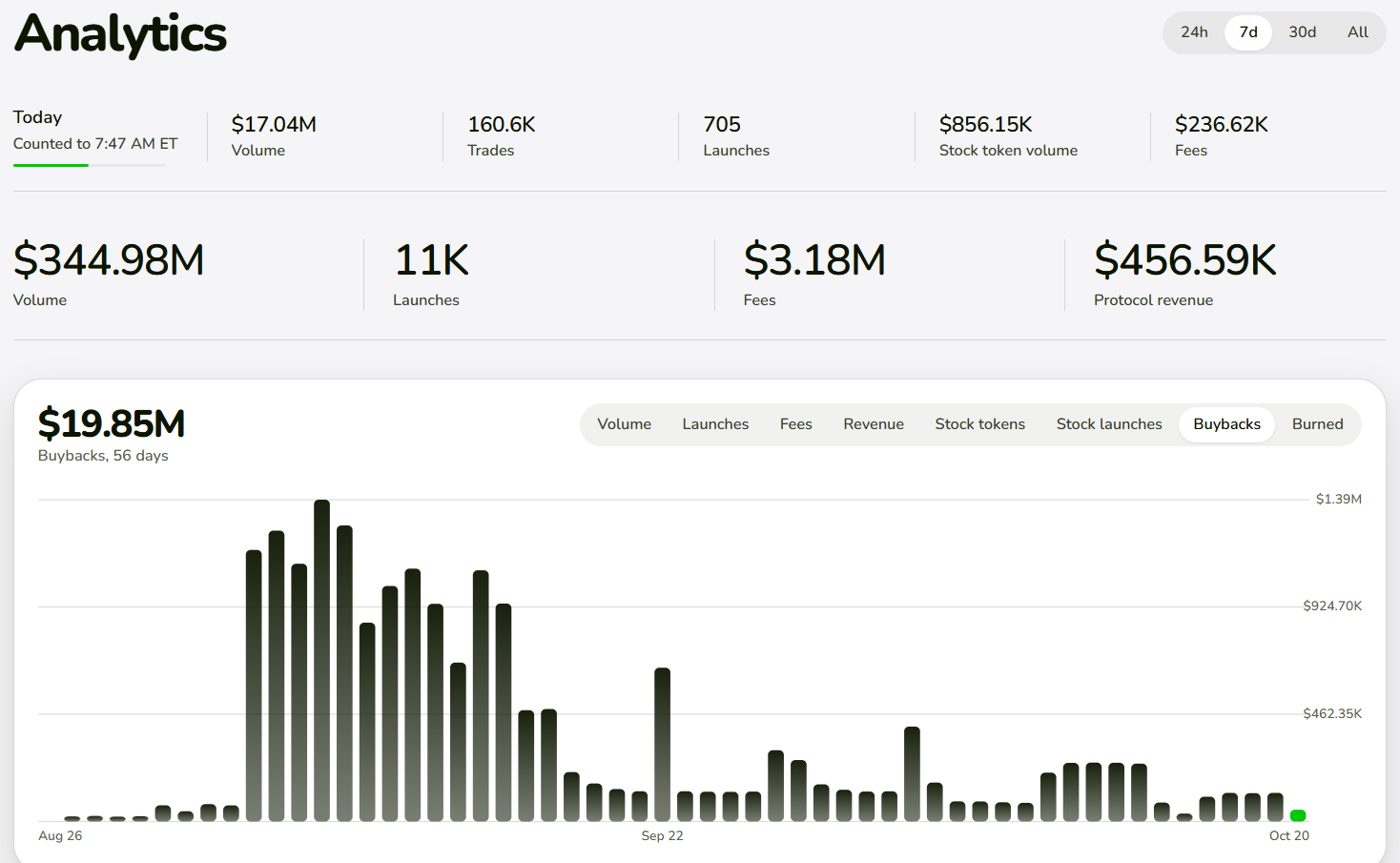
Pons says these bought-back tokens are not burned. Instead, they are locked and released over five years between the creator and the protocol. The V2 guide reviewed here does not confirm a system that uses protocol fees to buy and burn a separate token called PONS.
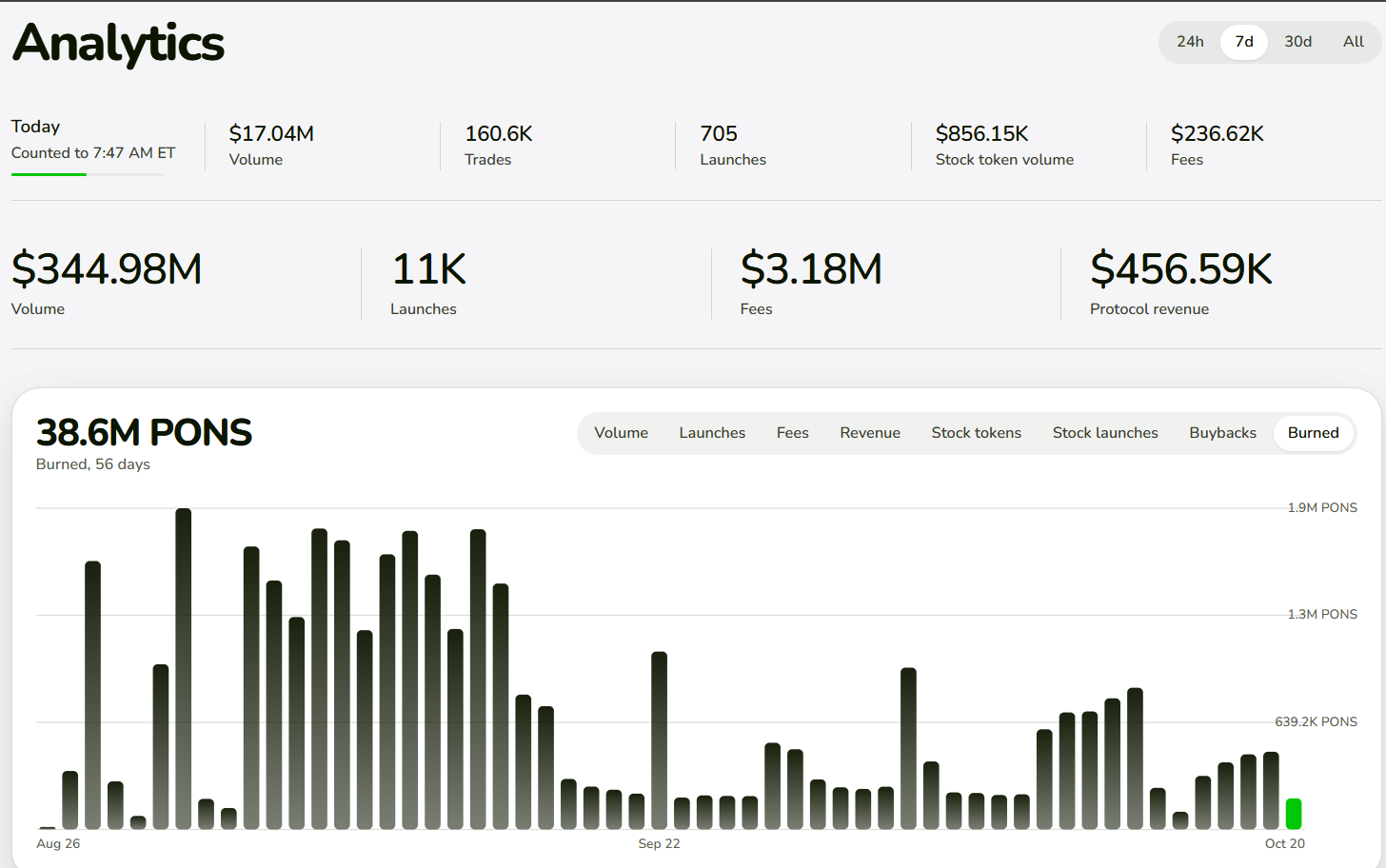
How Does Pons Compare With Other Robinhood Chain Launchpads?
The main difference described in the official guides is Pons’s launch process. V1 started in a Uniswap V3 pool. V2 starts on a bonding curve and moves to a Uniswap V4 pool when the curve is complete. Uniswap confirms that its products are available on Robinhood Chain, but each launch platform can have different fees and rules.
To compare platforms, check who can launch, how trading starts, what fees apply, what happens to liquidity after graduation, and whether an audit is available. The sources reviewed here do not support a claim that one platform is the “best” or “safest.”
What Risks Should Pons Users Know About?
Pons warns that launch tokens can be very volatile and may lose all their value. Token names, symbols and images are not unique, so a different token can look like a real project. Check the token’s contract address, not just its name or logo.
Bitquery reviewed Robinhood Chain records from August 3 to September 3, 2026. It counted 207,893 Pons launches; 3,228 had graduated by the report cutoff, or 1.55%. This is a result for that period, not a forecast or a current rate.
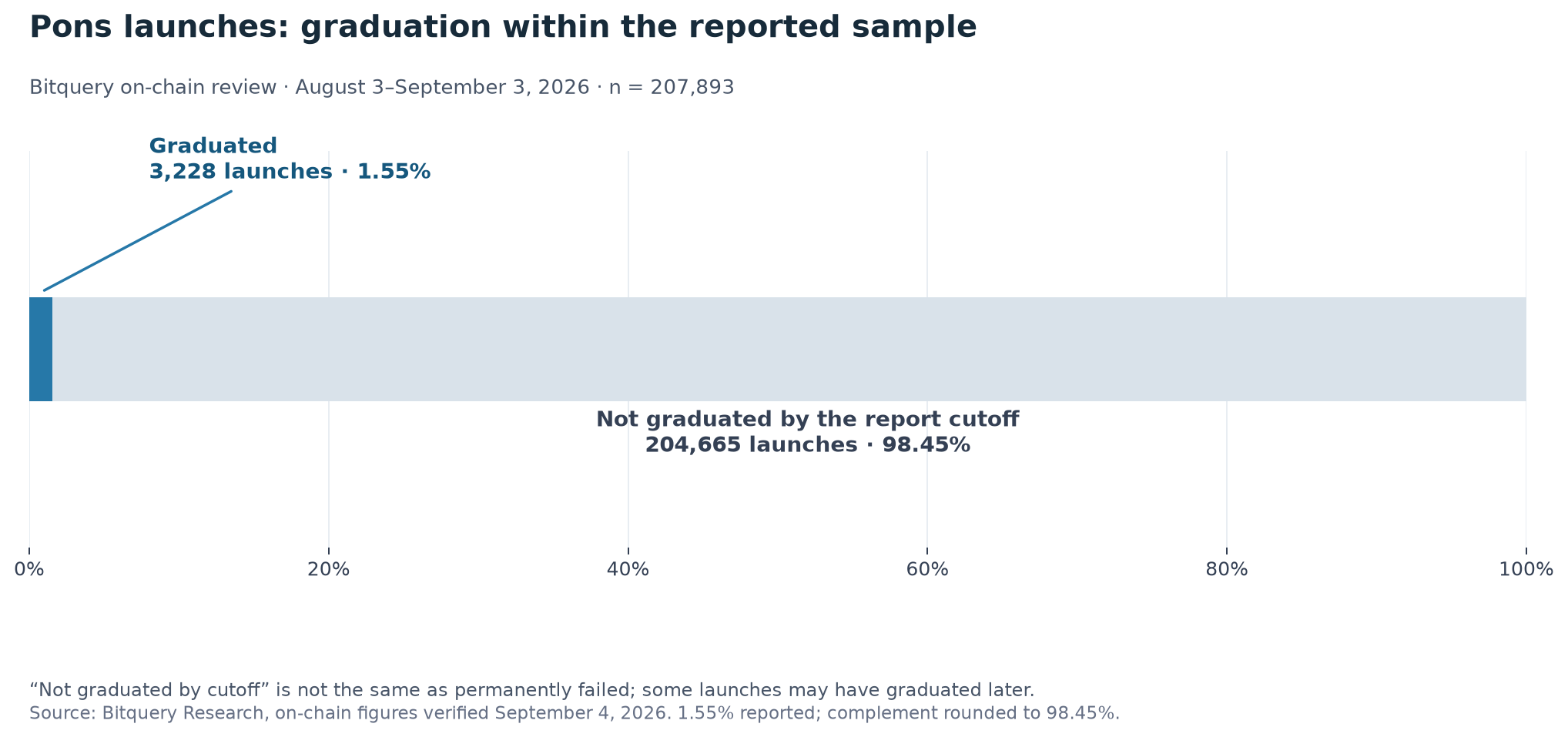
Graduated by cutoff: 3,228 (1.55%)
Not graduated by cutoff: 204,665 (98.45%)
The second group had not graduated by the report cutoff; this does not mean that every launch permanently failed. Source: Bitquery Research.
Pons’s V2 guide also said that no audit had been completed when it was checked on October 20, 2026. It advised readers to treat V2 as unaudited until an audit report is published. This status may change, so check the current guide. An audit does not remove all risks.
How Can You Verify a Pons Token and Its Contract?
Check the token’s full contract address. A contract address identifies a token on the blockchain. Names, symbols and logos can be copied, but the address lets you check the specific token. Pons advises users to check the address.
Before approving a trade, review the token’s trading pair, any creator tax, the amount you will pay and the amount you may receive. Use the wallet’s transaction screen. Never share a wallet password, private key or recovery phrase to check a token.
Who Can Launch a Token on Pons?
On October 20, 2026, Pons’s V2 guide said that public launches were closed and only approved wallet addresses could create tokens. “Approved” means the wallet is on Pons’s allowed list. Pons advises checking its canLaunch(address) setting because access may change.
This limit is about creating tokens. Pons’s guide describes buying and selling as open to traders, but users should still check the token and its terms before trading.
Frequently Asked Questions About Pons
Is Pons a Robinhood product?
The sources reviewed describe Pons as a launch platform on Robinhood Chain. They do not show that Robinhood operates Pons. Robinhood’s chain guide says that third-party projects are not necessarily endorsed or affiliated with Robinhood.
Can a Pons token lose all its value?
Yes. Pons warns that launch tokens may lose all their value. Check the contract address because another token can use a similar name or image.
Can anyone create a token on Pons V2 now?
The guide checked on October 20, 2026 said no. Public launches were closed, and only approved wallet addresses could create tokens. Check Pons’s current guide because this can change.
Does graduation mean a Pons token is safe?
No. Graduation means the token reached the end of its bonding curve. Pons says this is not a sign of quality and does not guarantee a safe investment or a good selling price.
What does it cost to launch or trade on Pons?
Pons’s V2 guide describes a launch fee and trading fees. A creator may also set an extra tax. Check the current terms for the specific token and the amounts shown in your wallet before signing.