



The global payments giant Mastercard has officially announced a major expansion into regulated stablecoin settlement systems, enabling transactions using assets like USDC, PYUSD, RLUSD, and SoFiUSD across multiple blockchain networks including Solana, Ethereum, Polygon, and Base.
This move allows issuers and acquirers to settle transactions in stablecoins beyond traditional banking hours, including weekends and holidays—marking a major shift toward always-on global financial infrastructure.
In this article, we break down what Mastercard’s stablecoin settlement expansion means, why it matters, and how it could reshape global payment systems.
Table of Contents
1. Mastercard’s Stablecoin Settlement Expansion2. How the New System Works
3. Supported Stablecoins Explained
4. Blockchain Networks Involved
5. Impact on Global Payments
6. Benefits for Banks and Merchants
7. Risks and Challenges
8. Final Verdict
FAQs
1. Mastercard’s Stablecoin Settlement Expansion
Mastercard has expanded its global settlement infrastructure to support regulated stablecoins, allowing financial institutions to settle transactions using blockchain-based digital dollars instead of relying solely on traditional banking rails.
This update marks a significant milestone in the company’s broader strategy to modernize cross-border payments and reduce settlement delays.
The shift represents a transition from banking-hour systems to always-on digital settlement infrastructure.
2. How the New System Works
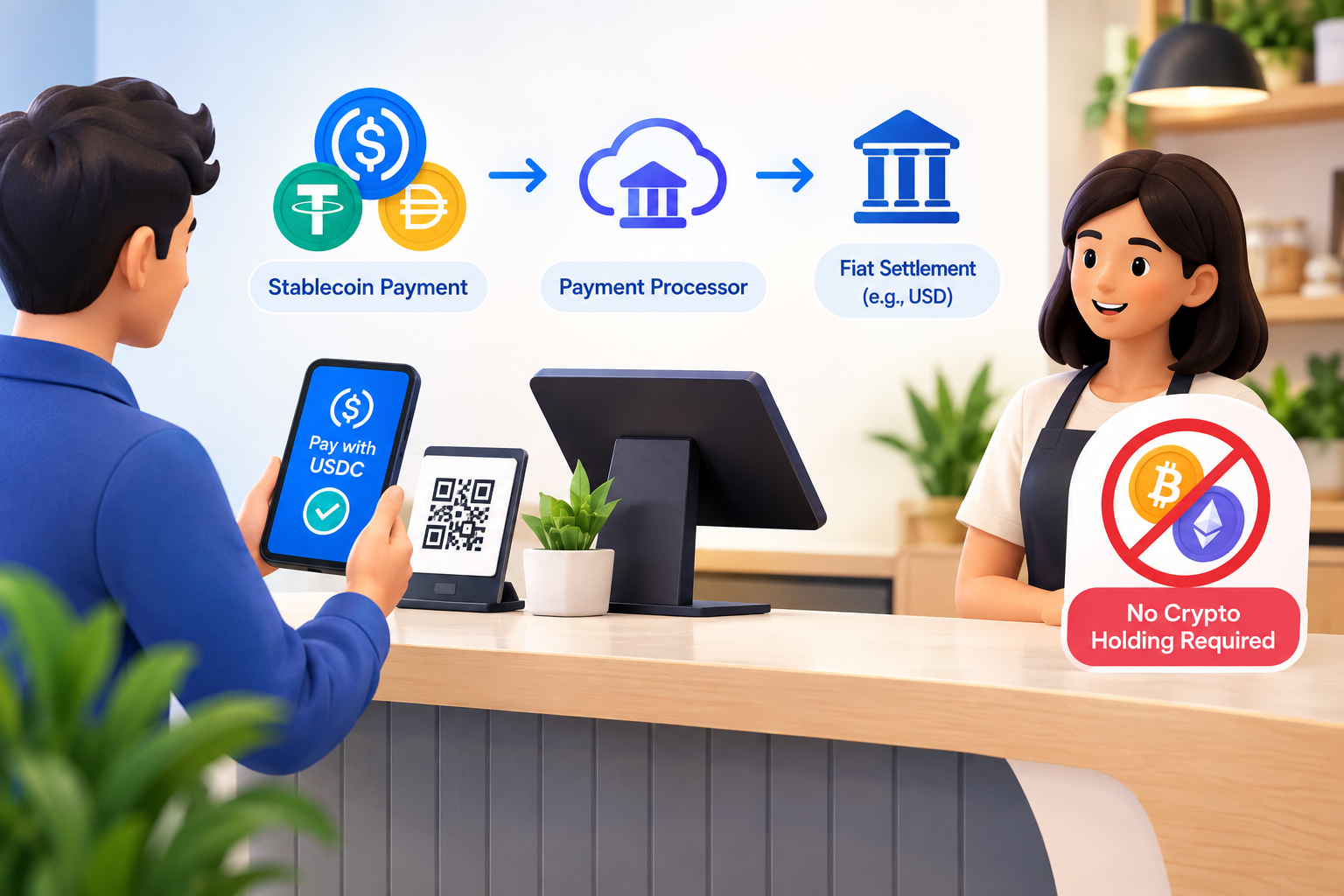
The system enables issuers and acquirers to convert traditional fiat settlements into stablecoin-based transactions, which can be processed instantly on supported blockchain networks.
Payment is initiated through Mastercard’s network.
Fiat value is converted into regulated stablecoins.
Transactions settle on networks like Solana and Ethereum.
3. Supported Stablecoins Explained
Mastercard’s settlement system integrates multiple regulated stablecoins, each designed to maintain a 1:1 peg with the US dollar. These assets improve liquidity, reduce settlement friction, and enable faster cross-border value transfer across blockchain networks.
USDC
The most widely adopted regulated stablecoin, backed by cash and short-term U.S. treasuries. It is heavily used in institutional settlements and cross-border payments.
PYUSD
Issued by PayPal, PYUSD is designed for mainstream digital payments, enabling seamless integration between fintech platforms and blockchain rails.
RLUSD
A regulated institutional stablecoin designed for enterprise-grade settlement systems and financial infrastructure integration.
SoFiUSD
A newer entrant aligned with digital banking ecosystems, aimed at expanding blockchain-based financial services within consumer fintech platforms.
4. Blockchain Networks Involved
The settlement system is designed to be multi-chain, allowing Mastercard to distribute transactions across several blockchain ecosystems for better scalability, speed, and interoperability between traditional finance and decentralized networks.
A high-performance blockchain optimized for ultra-fast and low-cost transactions, making it ideal for real-time payment settlement and high-volume financial activity.
The largest smart contract ecosystem, widely used for decentralized applications, institutional DeFi solutions, and secure programmable financial infrastructure.
A scalable Layer-2 solution built on Ethereum that reduces transaction costs while increasing throughput, commonly used for enterprise-grade blockchain applications.
A Coinbase-backed Layer-2 blockchain designed to bring scalable, low-cost, and developer-friendly infrastructure to mainstream Web3 and financial applications.
5. Impact on Global Payments
Mastercard’s stablecoin settlement expansion is reshaping global payments by reducing friction in cross-border transactions and enabling near-instant value transfer across financial systems.
Traditional settlement systems rely on banking hours and intermediaries, often taking 1–3 business days. With stablecoins, settlement can occur in seconds, improving liquidity efficiency for banks and merchants.
This shift strengthens the convergence of TradFi (traditional finance) and DeFi (decentralized finance), creating a hybrid global payment infrastructure.
*Note: Values are industry-estimated distribution trends (not official Mastercard data).*
6. Benefits for Banks and Merchants
The adoption of stablecoin-based settlement infrastructure brings major operational improvements for banks, payment processors, and global merchants by reducing friction in cross-border value movement.
Transactions settle instantly without reliance on banking hours, weekends, or international cut-off times.
Eliminates multi-day clearing cycles, enabling near real-time global transfers between financial institutions.
Reduces dependency on intermediaries, correspondent banks, and reconciliation overhead systems.
7. Risks and Challenges
While stablecoin settlement systems introduce efficiency gains, they also introduce new structural and regulatory challenges that must be resolved for large-scale global adoption.
Global financial regulations for stablecoins are still evolving, creating compliance risk across jurisdictions.
Multiple blockchains and stablecoins can split liquidity, reducing efficiency in certain settlement corridors.
Dependence on issuer reserves and audits remains critical for institutional confidence in stablecoin systems.
*This chart represents an analytical estimation of risk intensity based on current industry discussions and adoption challenges, not official Mastercard data.*
8. Final Verdict
Mastercard’s expansion into stablecoin settlements across Solana and other major blockchains marks a major step toward integrating blockchain technology into global financial infrastructure. While still evolving, this move signals a long-term shift toward faster, more efficient, and always-on payment systems.
Frequently Asked Questions (FAQ)
1. What is Mastercard’s stablecoin settlement system?
It is a payment infrastructure that enables settlements using regulated stablecoins on blockchain networks.
2. Which stablecoins are supported?
USDC, PYUSD, RLUSD, and SoFiUSD.
3. Which blockchains are included?
Solana, Ethereum, Polygon, and Base.
4. Why is this important?
It enables 24/7 global settlement beyond traditional banking hours.
5. Does this replace traditional banking?
No, it complements existing systems by improving speed and efficiency.