



Robinhood Chain introduces an AI-native Layer 2 ecosystem allowing users to deploy on-chain agents for autonomous trading via self-custodial wallets. Leveraging protocols like Virtuals and runtimes such as VEX or Raxol, this infrastructure automates complex tasks like token swaps and liquidity management directly on-chain.
The New Tech Stack: AI Agents on Layer 2
Trading on Robinhood Chain is fundamentally different from traditional "Agentic Trading." Instead of an API connection to a brokerage account, you are deploying autonomous code that lives alongside your assets. This setup offers several advantages:
- Self-Custody: You maintain full control over your private keys; the agent only has the permissions you explicitly grant via smart contracts.
- 24/7 Execution: On-chain agents run independently of your local hardware, executing trades based on block-time triggers.
- Composability: Your agents can interact with any DeFi protocol on Robinhood Chain, including tokenized real-world assets (RWAs).
Most traders lose opportunities because they cannot monitor markets 24/7. AI agents on Robinhood Chain aim to automate trading decisions using smart contracts while keeping users in control of their own wallets. In this guide, you'll learn how AI trading agents work, how to set one up safely.
Key Protocols for On-Chain Agents
| Protocol/Runtime | Role in the Ecosystem | Best For |
|---|---|---|
| Virtuals Protocol | Infrastructure layer for tokenized AI agents. | Launching and co-owning autonomous trading agents. |
| VEX Runtime | Local execution environment for AI agents. | Running agents with memory, missions, and wallet approvals. |
| Raxol | Autonomous on-chain agent. | High-volume automated trading and liquidity management. |
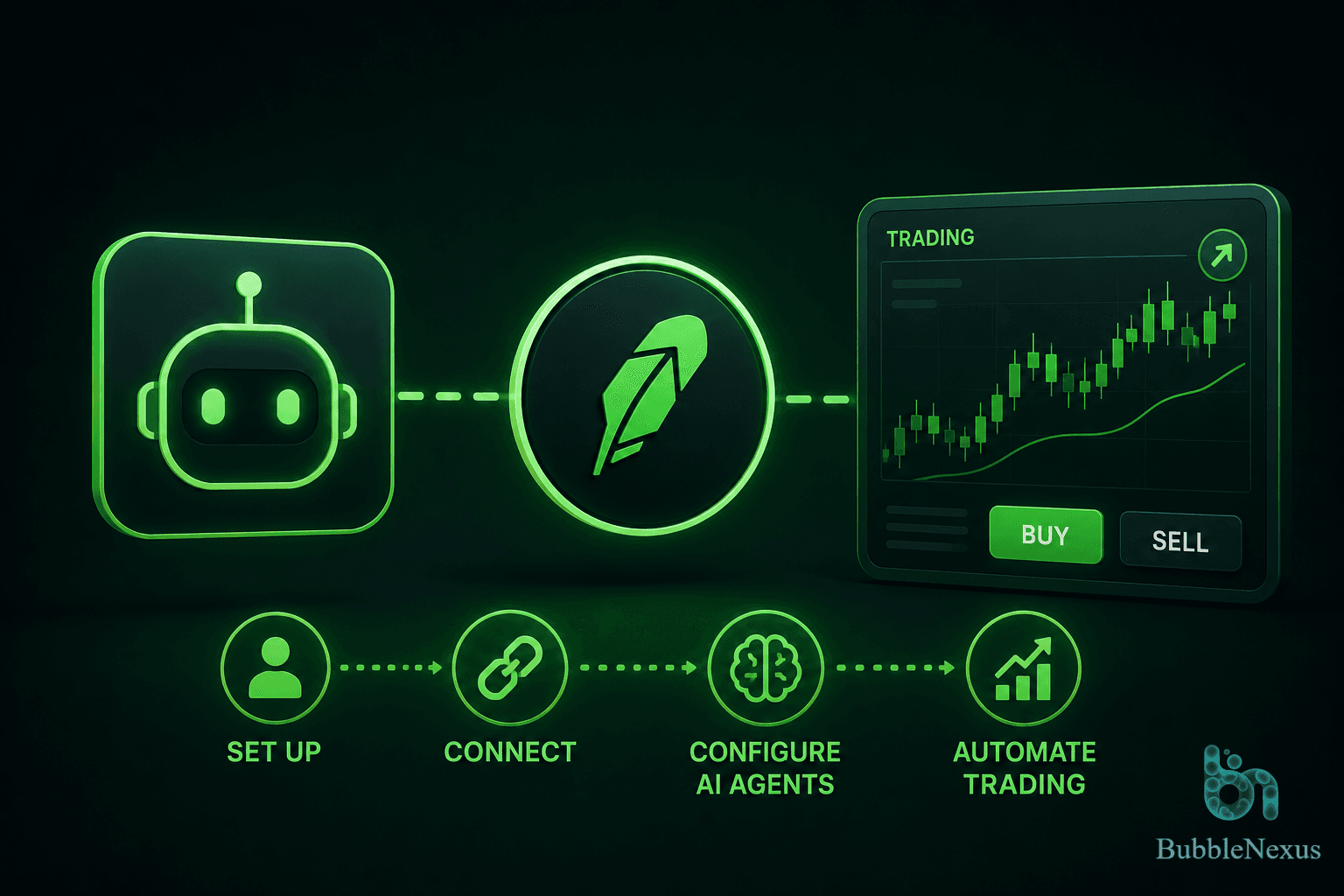
Step-by-Step Guide to Setting Up Your Web3 AI Agent
Setting up an on-chain agent requires a Web3-native approach. Follow these steps to initialize your autonomous trader.
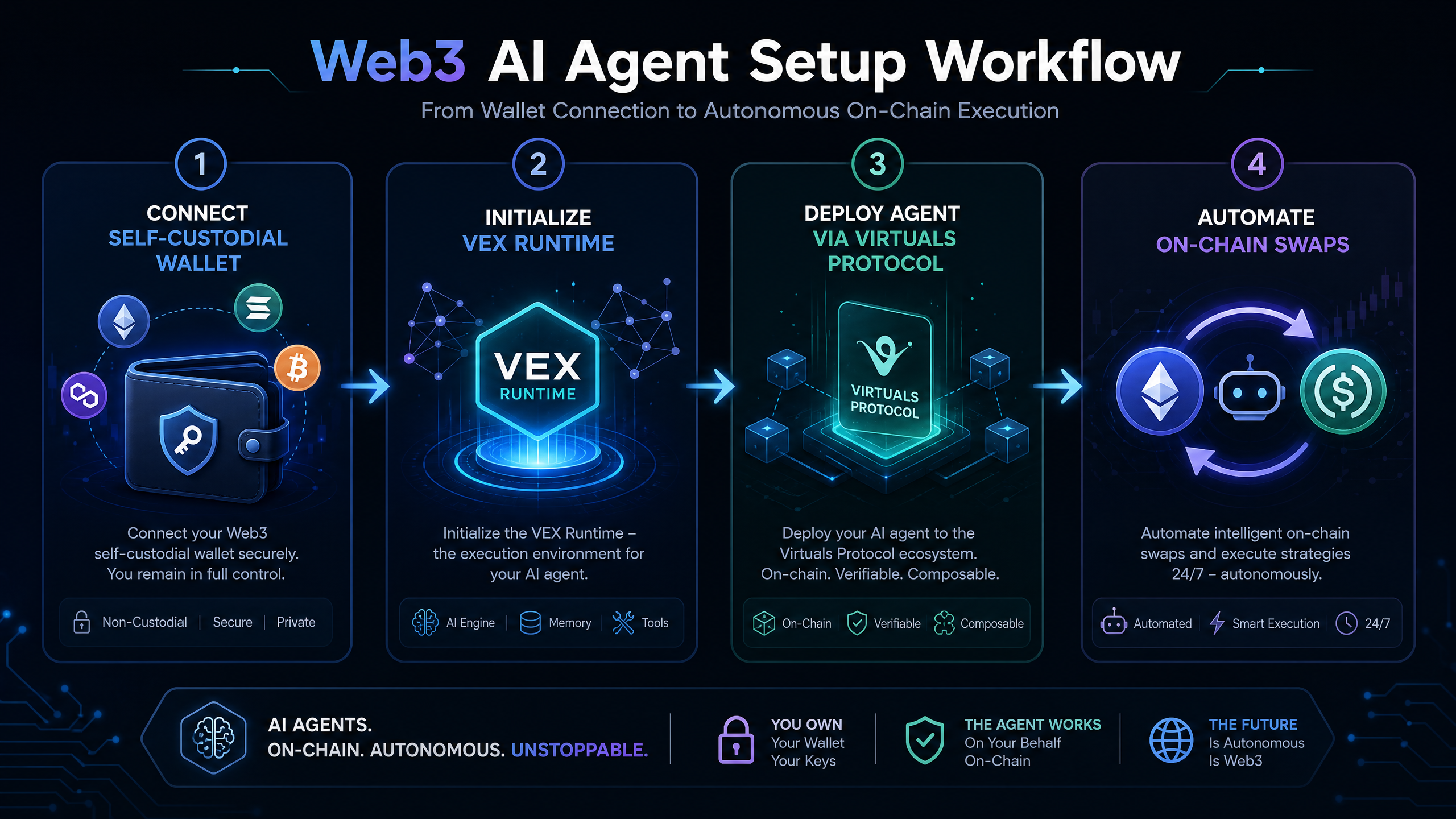
Step 1: Configure Your Self-Custodial Wallet
To interact with Robinhood Chain, you need a compatible Web3 wallet (e.g., Robinhood Wallet, MetaMask, or Rabby). Ensure you have added the Robinhood Chain Mainnet to your network list and have a small amount of ETH for gas fees. Your wallet acts as the "owner" of the agent you are about to deploy.
Step 2: Initialize the VEX Runtime or Connect to Virtuals
Depending on your technical preference, you can either run a local agent using VEX or deploy a tokenized agent via Virtuals Protocol.
- VEX Setup: VEX provides a runtime that manages the agent's memory and execution boundaries. You can initialize it to run an independent agent next to your wallet.
- Virtuals Protocol: Visit the Virtuals dashboard to browse existing agents like Raxol or launch a new one. Virtuals allows for "Agent Tokenization," where the agent's logic and revenue are represented by on-chain tokens.
Step 3: Grant Scoped Permissions
Unlike traditional apps, you don't give an agent your password. Instead, you use approval transactions. You can scope your agent's permissions to:
- Only swap specific token pairs (e.g., ETH/USDC).
- Limit the maximum trade size per transaction.
- Set a daily "drawdown" limit to protect your capital.
Step 4: Deploy and Automate
Once configured, your agent will begin scanning the Robinhood Chain for opportunities. For example, Raxol, one of the chain's first agents, quickly rose to the top by volume, managing tokenized equities and crypto assets autonomously.
Automating Your Crypto Trading Strategies
With your agent live, you can now automate advanced strategies that were previously only available to institutional desks:
- Mean Reversion: Automatically buy oversold tokenized stocks and sell when they revert to the moving average.
- Yield Harvesting: Move liquidity between different pools on Robinhood Chain to maximize returns.
- Sentiment-Based Trading: Connect your agent to social feeds (via the VEX mission system) to trade based on real-time market hype.
Safety and Monitoring
While on-chain agents are "unstoppable," they are not infallible. Always:
- Audit the Logic: Ensure you are using verified agent templates from the Virtuals ecosystem.
- Monitor the Logs: Check the on-chain execution logs regularly to ensure the agent is following your "mission".
- Start Small: Only fund your agent's scoped wallet with capital you are willing to risk during the initial "learning" phase.
Conclusion
The Robinhood Chain is the new frontier for agentic finance. By moving from a traditional brokerage model to a Web3-native stack involving Virtuals Protocol and VEX, you gain unprecedented control and automation over your financial future. Whether you are trading tokenized stocks or the latest crypto assets, on-chain AI agents are the ultimate tool for the modern, decentralized investor.
Frequently Asked Questions (FAQs)
1. How can I securely limit an AI agent's trading authority on Robinhood Chain?
Use smart contract-based permissions to set token approvals, trade limits, and spending caps, allowing the AI agent to trade securely while you retain full control of your assets.
2. What is the difference between deploying an AI agent through Virtuals Protocol and running one with the VEX Runtime?
Virtuals Protocol lets you deploy and own tokenized AI agents on-chain, while VEX Runtime provides the execution environment for running agents with memory, missions, and automated workflows.
3. Can an AI trading agent interact with multiple DeFi protocols and tokenized assets simultaneously?
Yes. AI agents on Robinhood Chain can securely interact with DeFi protocols, RWAs, liquidity pools, and DEXs within the permissions you authorize, enabling automated multi-strategy trading.