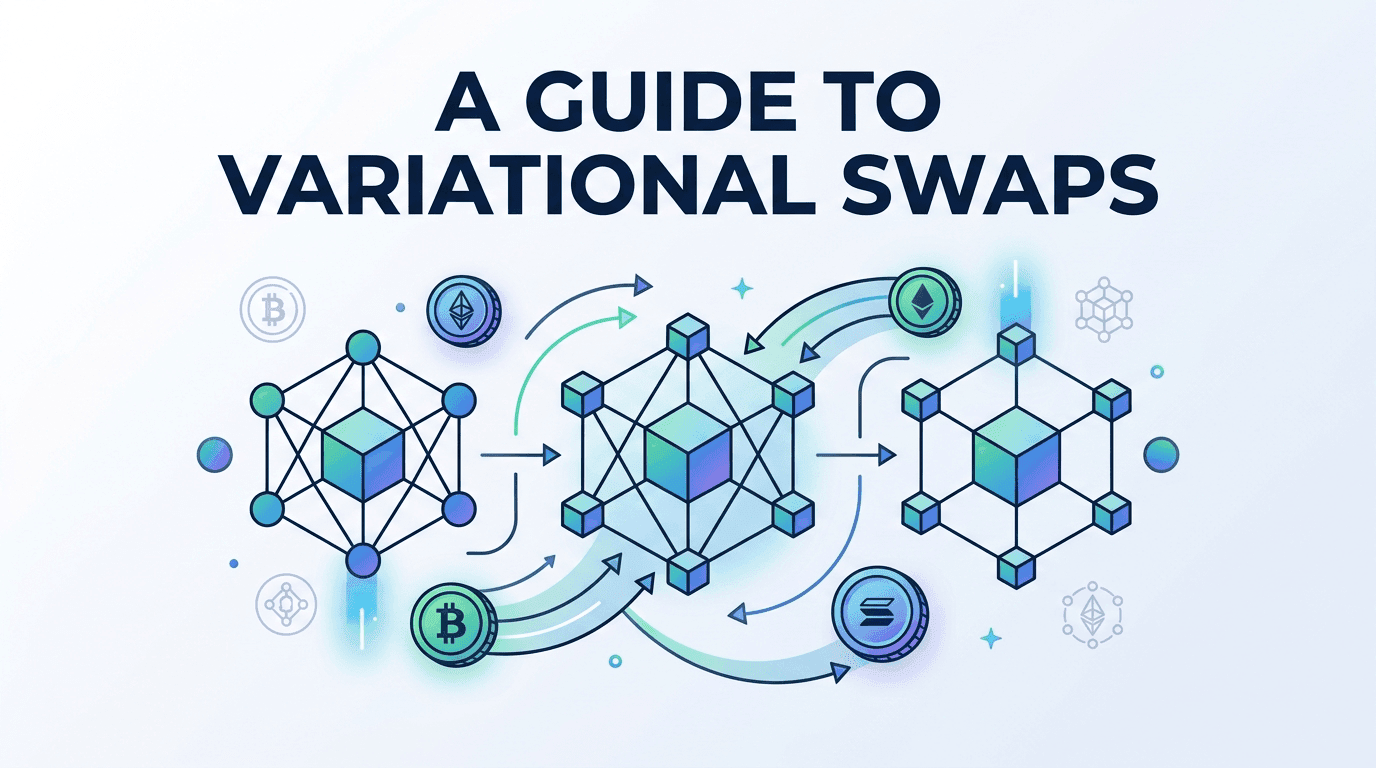




Variational swaps are perpetual, USDC-settled linear derivatives designed to track the total return of an underlying asset. They bring exposure to markets such as equity indices, commodities, precious metals, and foreign exchange into an on-chain trading venue, while using funding linked to traditional-market financing costs rather than the supply-and-demand funding commonly associated with crypto perpetual futures.
What are Variational swaps?
Variational swaps are leveraged derivatives that seek to track the total return of an underlying asset over time. They are perpetual instruments, so they do not have a fixed expiry date, and positions settle in USDC.
- Instrument: Linear derivative
- Settlement asset: USDC
- Expiry: Perpetual
- Leverage: Available, subject to the market’s limits
- Margin: Isolated margin for swaps while they use fixed trading hours
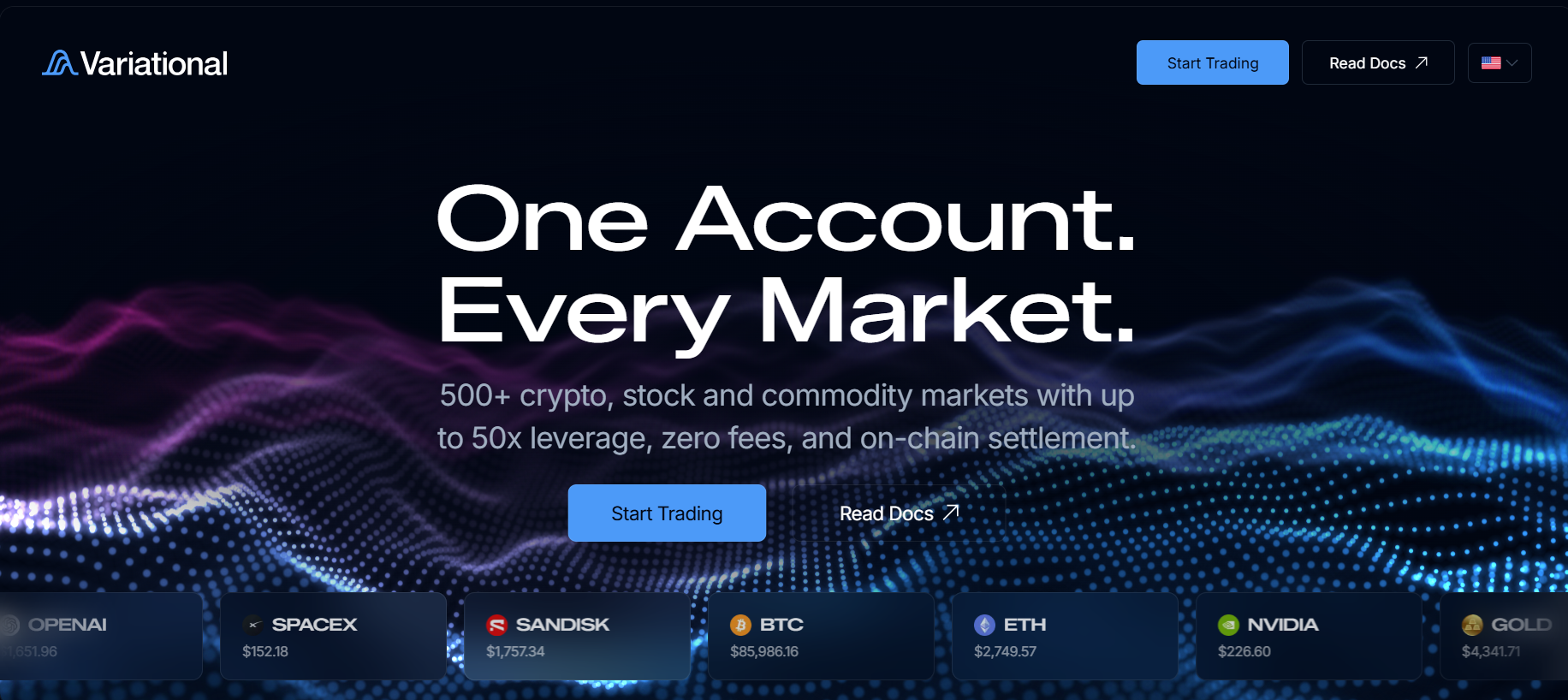 Source: Variational Homepage
How do swaps differ from perpetual futures?
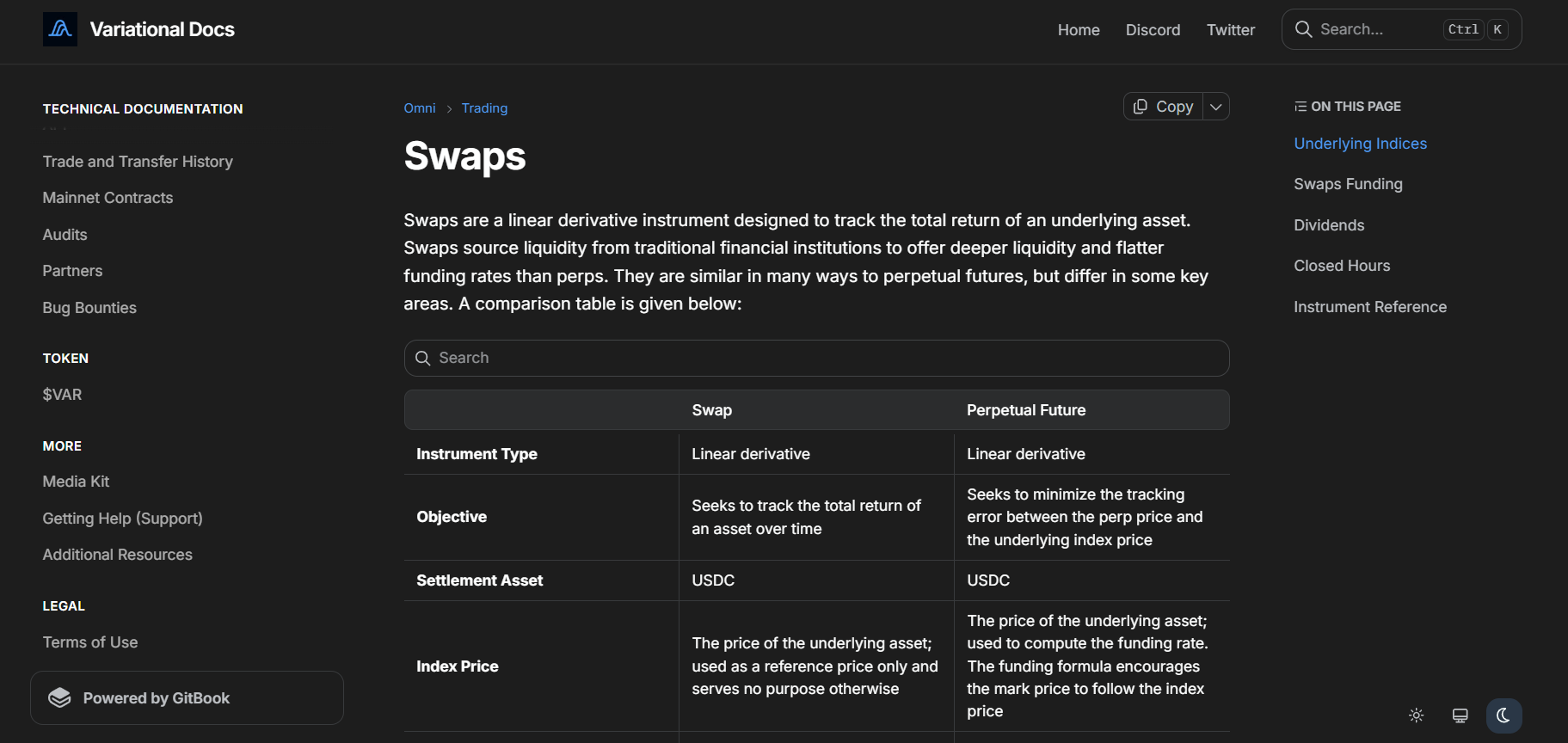
The most important difference is the objective and funding model. A swap is designed to follow the total return of its underlying asset, whereas a perpetual future is designed to reduce the gap between its mark price and the underlying index price.
| Feature | Variational swap | Perpetual future |
|---|---|---|
| Settlement | USDC | USDC |
| Funding | Based on real traditional-market financing costs | Highly variable and driven by supply and demand |
| Liquidity source | Traditional-finance institutions | Crypto exchanges and crypto-native liquidity |
| Trading hours | Open and closed hours that initially mirror traditional markets | 24/7 |
| Margin | Isolated only until 24/7 trading is available | Isolated or cross margin |
| Cash adjustments | Dividends and other cash adjustments can be passed through | Cash adjustments are supported on Variational Omni |
How are swap prices and underlying indices determined?
The index price is a reference price for a swap. It is sourced from Variational’s traditional-finance liquidity partners and depends on the market’s asset class.
- Precious metals and foreign exchange: The index references the spot price of the underlying asset, with the cost of carry charged through daily funding.
- Equity indices: The index uses front-month futures discounted to a spot-equivalent value using a fair-value basis that accounts for interest and expected dividends.
- Other commodities: The index can blend the nearest two listed futures contracts and continuously shift the weighting from the front month to the second month.
For futures-referenced markets, the documentation states that the roll is designed not to create a discrete gap or a direct profit-and-loss impact on an open position. The related carry is handled through the market’s funding process.
How does funding work on Variational swaps?
Swap funding is applied once per day at the market’s daily close, listed in the documentation as 17:00 Eastern Time from Monday through Friday, for positions held through the close. Rates are set per market and reflect the financing cost of the underlying traditional market.
- Equity indices: Funding reflects the overnight interest rate of the index currency, such as SOFR for U.S.-dollar indices, adjusted by a spread.
- Foreign exchange: Funding reflects the overnight interest-rate differential between the two currencies, adjusted by a spread.
- Precious metals: Funding reflects the implied overnight cost of borrowing or lending the metal against the U.S. dollar.
- Other commodities: Funding reflects the daily carry of the underlying futures curve and may be positive or negative.
Long and short funding rates are published separately and can be asymmetric. The usual pattern is for longs to pay and shorts to receive, but market conditions can reverse that relationship. Because underlying traditional markets close on weekends, one weekly payment can be tripled to cover the closed days. The documentation identifies Friday for equity indices and commodities, and Wednesday for foreign exchange and precious metals.
What happens when a swap market is closed?
Swaps initially use defined open and closed hours rather than continuous 24/7 trading. While a market is closed, market orders, limit orders, trigger orders, take-profit and stop-loss orders, and liquidations do not process; those actions resume when the market reopens.
This schedule is a practical difference from crypto perpetual futures. Before trading, a user should check the market’s hours, holiday schedule, funding timing, and whether an order or risk-control instruction can execute during the next open session.
What can traders see in Variational’s markets interface?
Variational’s official markets interface separates perpetual futures and swaps and displays fields including 24-hour volume, price, open interest, and annualized funding. The interface also labels swap markets with a “SWAP” tag and shows separate long and short funding figures where applicable.
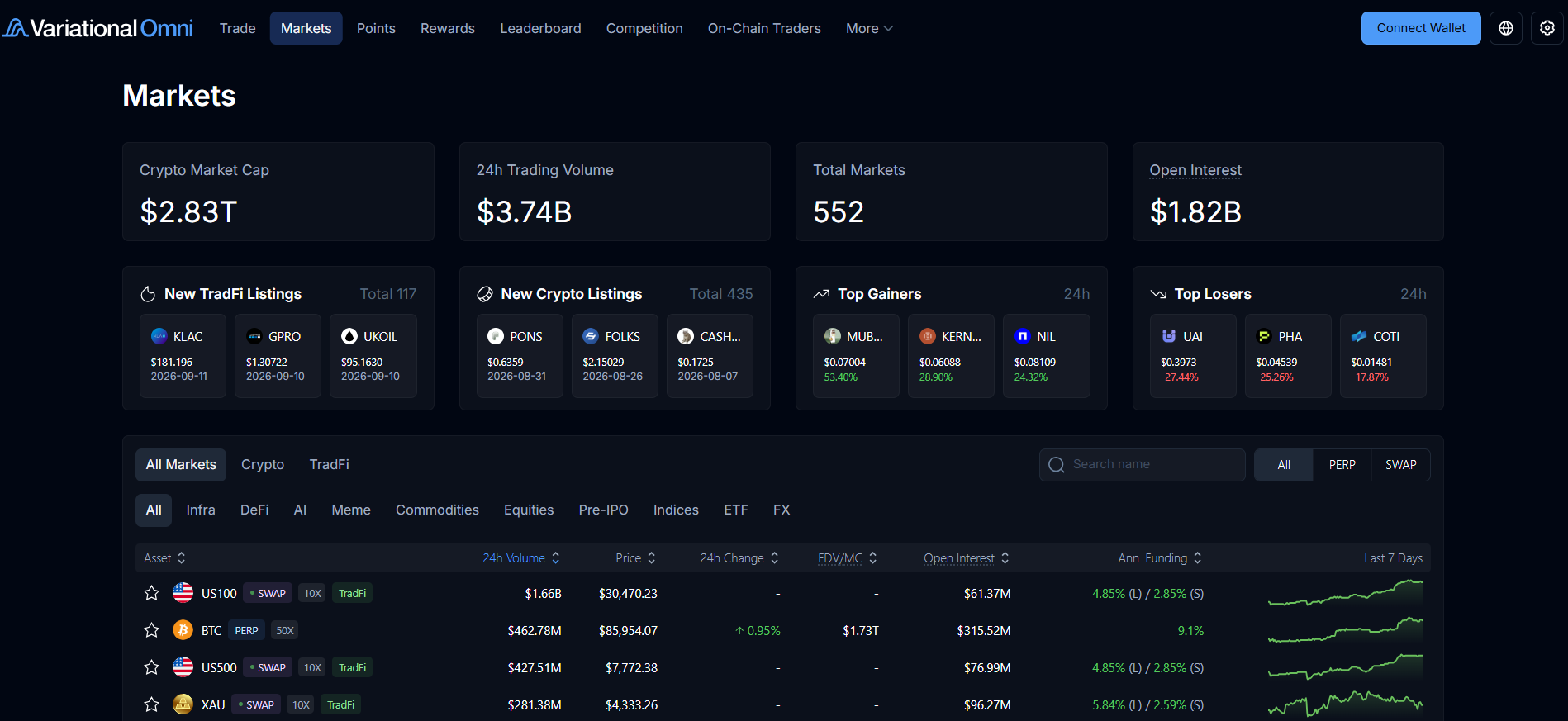 Source: Variational Swaps
How can someone approach a swap trade step by step?
A simple workflow is to identify the market, understand its index and funding rules, choose isolated margin, and confirm that the trading session is open before placing an order.
- Select the underlying: Decide whether the intended exposure is an equity index, commodity, precious metal, foreign-exchange pair, or another listed market.
- Read the instrument details: Check the index source, trading hours, funding benchmark, funding schedule, and any cash-adjustment rules.
- Review the quote: Examine the available price, leverage limit, margin requirement, and projected position size.
- Use isolated risk: Swaps currently use isolated margin, so size the position with the possibility of adverse price moves and funding charges in mind.
- Monitor funding and closures: A position held through the daily close may incur or receive funding, and a closed market may delay orders, stops, or liquidations.
- Close or manage the position: Use the available order controls while the market is open and continue checking the market-specific rules.
What are the main risks to understand before trading swaps?
Leverage can magnify both gains and losses, and a swap’s funding, trading hours, and index construction can materially affect the result of holding a position. A swap is not the same as owning the underlying asset.
- Leverage risk: A relatively small move in the underlying can have a larger effect on margin and liquidation risk.
- Funding risk: Daily funding can reduce returns or, depending on the market and direction, add to them.
- Closure risk: Orders and liquidations do not process while the market is closed.
- Index and roll risk: Futures-referenced markets use a defined index methodology and carry adjustments that should be understood before trading.
- Access risk: Availability can depend on jurisdiction and the platform’s terms for restricted persons.
Frequently Asked Questions
Q: Are Variational swaps perpetual contracts?
A: Yes. Variational describes swaps as perpetual linear derivatives with no fixed expiry date.
Q: What asset is used to settle Variational swaps?
A: Swaps settle in USDC.
Q: Are swap funding rates the same as crypto-perpetual funding rates?
A: No. Swap funding is tied to traditional-market financing costs, while perpetual-future funding is highly variable and driven by supply and demand.
Q: Do Variational swaps trade 24/7?
A: Not initially. Swap markets use open and closed hours, with a longer-term plan to extend trading hours over time.
Q: Can I use cross margin for a swap?
A: Variational’s official documentation says swaps currently support isolated margin only while they use fixed trading hours.
Q: Where can I check a swap’s funding and market information?
A: The official Omni markets interface displays swap labels, market statistics, open interest, and annualized funding information. Market-specific details should be checked before placing a trade.
Disclaimer: The information on this blog is for informational and educational purposes only and does not constitute financial, investment, or legal advice. Cryptocurrency investments are highly volatile and carry a high risk of financial loss.