
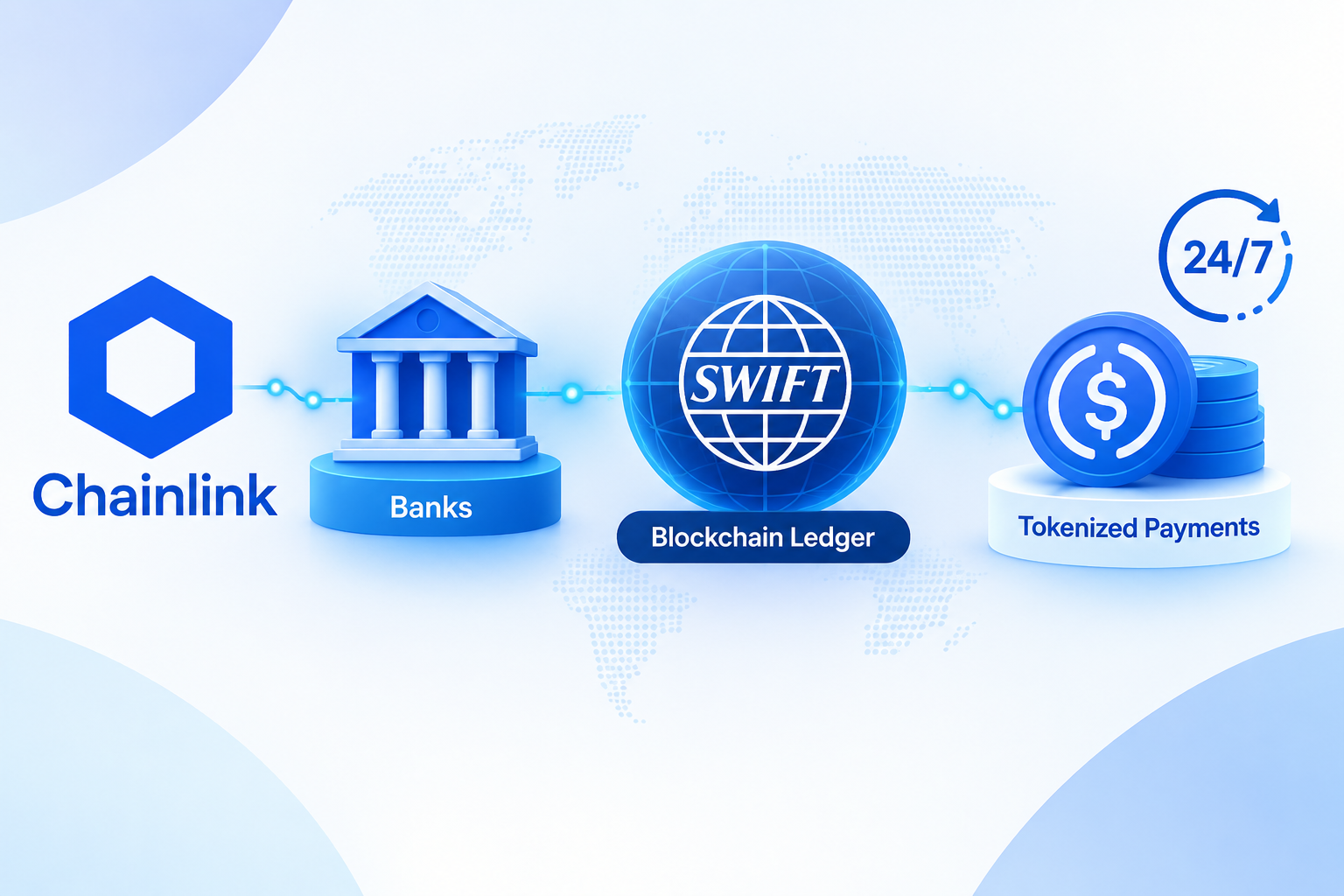
Chainlink is developing a connection that will let financial institutions link their systems and transaction-signing infrastructure to Swift’s blockchain ledger, extending the network’s tokenized-deposit payment initiative. The proposed setup is designed to help banks coordinate cross-border transfers around the clock while retaining control over transaction approvals and keeping deposits on their own ledgers.
How the connection is designed to work
The Chainlink Runtime Environment, or CRE, will coordinate workflows between a bank’s systems and Swift’s ledger. Under the described self-signing model, banks—not the intermediary workflow—retain the keys used to authorize transactions. Chainlink says institutions can manage smart-contract activity both on their own ledgers, where their tokenized deposits reside, and on Swift’s shared ledger.
The approach is intended to fit within banks’ existing security governance, approval procedures and operating models. Chainlink has described the work as enabling institutions to connect; it has not said that the new connection is already broadly deployed across participating banks.
What the Swift ledger does—and does not do
Swift’s ledger provides a shared coordination layer for participating institutions to move tokenized deposit obligations, including overnight and on weekends. The deposits remain on the issuing banks’ own ledgers and balance sheets. The shared layer coordinates payment activity before final settlement, rather than replacing the underlying settlement systems.
That distinction matters: 24/7 payment coordination does not necessarily mean every transfer is finally settled on-chain at the same moment. Swift’s model preserves existing settlement arrangements, including real-time gross settlement systems where agreed, and does not replace its established role as a global financial messaging network.
Key facts
- Swift announced in July that its ledger was ready for initial use.
- Seventeen banks spanning six continents were preparing to pilot live tokenized-deposit transactions.
- Swift’s network reaches more than 11,500 financial institutions and corporates across over 200 markets.
- The first use case is cross-border payments designed to operate at any hour, including weekends.
From pilot infrastructure to wider access
Swift developed the ledger with input from more than 40 financial institutions, moving from concept to activation in nine months. The initial use is controlled and focused on pilots, rather than a universal replacement for existing payment channels. Participating banks include Citi, HSBC, UBS, BNP Paribas, ANZ, DBS, Standard Chartered and Wells Fargo.
The Chainlink work addresses a practical interoperability problem: banks may need a way to connect internal systems and signing controls to shared infrastructure without abandoning their current processes. Its CRE-based workflow is positioned as that connection layer, while Swift supplies the shared ledger and established network reach.
What comes next
The next test is whether banks move from pilot transactions to broader, repeatable use, and how the connection performs across different institutional systems and approval frameworks. Swift has said the ledger will expand in functionality and availability after its initial controlled go-live phase. No rollout timetable for Chainlink’s integration across the participating banks has been specified.