
News

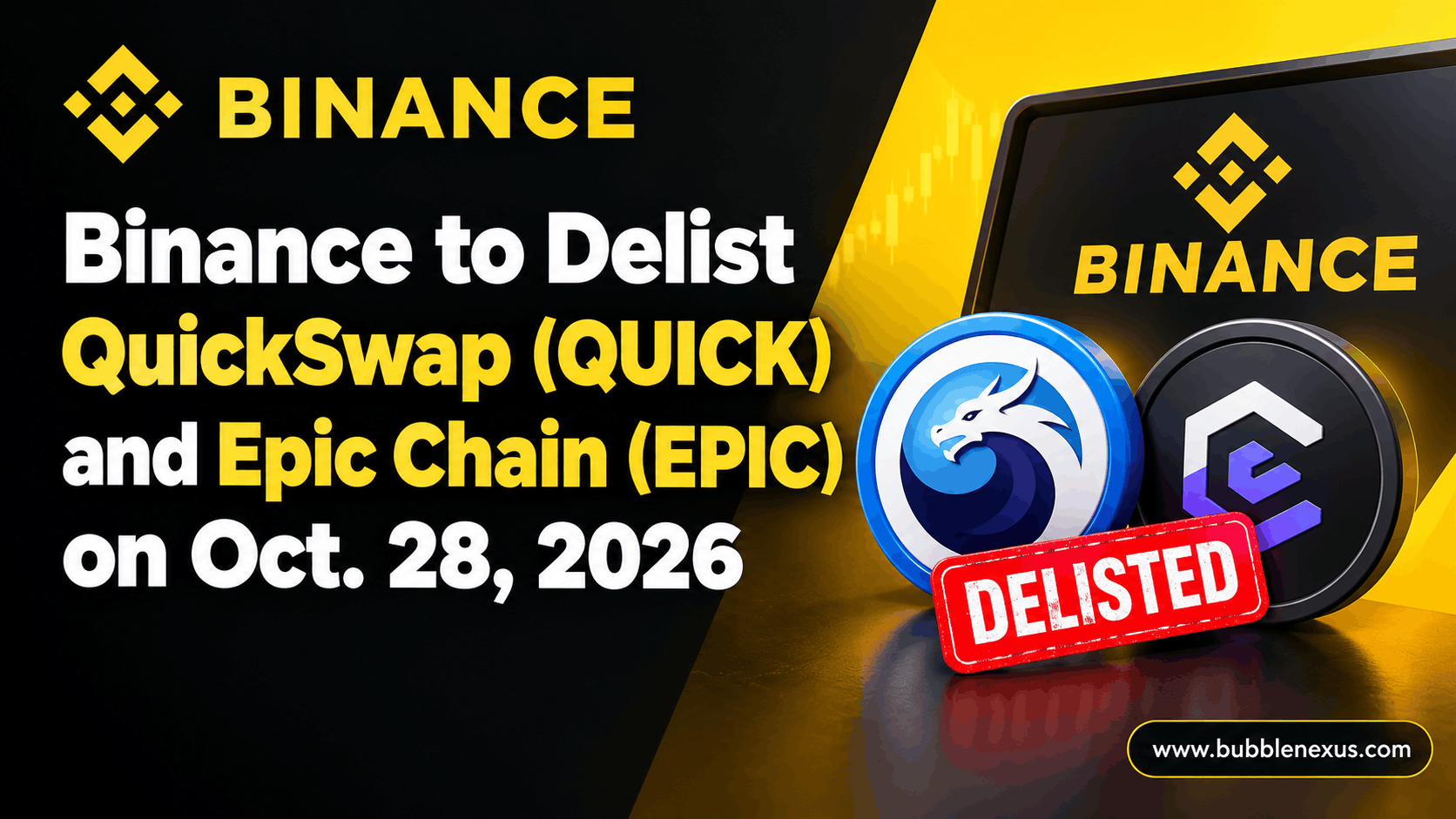
Binance to Delist QuickSwap (QUICK) and Epic Chain (EPIC) on Oct. 28, 2026

Share
Binance to Delist QuickSwap (QUICK) and Epic Chain (EPIC) on Oct. 28, 2026

Oct. 15, 2026 — Binance says it will remove all spot trading pairs for Epic Chain (EPIC) and QuickSwap (QUICK) at 03:00 UTC on Oct. 28, 2026. The exchange says open orders will be cancelled once trading stops. The delisting applies to spot markets first; other Binance products have their own cutoffs, some of which come earlier.

Why Binance says it is delisting QUICK and EPIC

Binance said it reached the decision after its latest review of listed digital assets. The exchange periodically checks whether a listed token continues to meet its standards and industry requirements. Its notice lists general review factors such as a project team’s commitment, development activity, trading volume and liquidity, network security, communication with the community, responses to due-diligence requests, regulatory requirements, token-supply or tokenomics changes, ownership or team changes, and community sentiment.

Those items describe Binance’s general review criteria, not a finding about either project. Binance did not say which specific factor led it to remove EPIC or QUICK, nor did it identify a particular violation. U.Today’s independent report also notes that the exchange did not specify an individual reason for the two decisions.

Key dates for the Binance delisting

Binance has not set one single deadline for every service. The dates below are in UTC and come from the exchange’s notice.

Binance’s announced 2026 dates for QUICK and EPIC services (all times UTC)
Date and timeBinance serviceWhat changes
Oct. 15, 03:00Buy & Sell CryptoEPIC, QUICK and associated pairs removed.
Oct. 15, 06:00MarginBorrowing of the affected tokens suspended.
Oct. 20, 08:30FuturesOpening new positions in affected contracts stops.
Oct. 20, 09:00FuturesRemaining positions automatically settled; contracts delisted.
Oct. 20, 10:00MarginTokens removed from cross, isolated and portfolio margin; applicable positions settled and orders cancelled.
Oct. 21, 03:00Spot Copy TradingAffected pairs delisted; remaining assets may be sold at market price or moved to Spot if unsellable.
After Oct. 21, 07:00Simple EarnSupport ends; unredeemed Flexible and Locked positions are automatically redeemed and transferred to Spot with accrued rewards.
Oct. 27, 02:00Convert Low-Value AssetsTokens removed from the service.
Oct. 28, 02:00ConvertTokens and associated pairs removed.
Oct. 28, 03:00Spot tradingAll affected pairs removed; open orders cancelled and applicable trading-bot services end.
Oct. 29, 03:00DepositsDeposits of EPIC and QUICK are no longer credited.
Dec. 28, 03:00WithdrawalsBinance says withdrawals will no longer be supported after this time.

For margin users, Binance says remaining collateral may be applied to liabilities during settlement. The exchange also describes circumstances in which collateral may be sold to repay liabilities or the delisted token may be sold into USDT or USDC. The exact handling depends on the user’s account and position type, as detailed in the notice.

After Dec. 29 at 03:00 UTC, Binance may convert remaining delisted tokens into stablecoins for users, but the exchange says this is not guaranteed. Binance says it will issue a separate notice before a conversion where applicable. If conversion is not feasible, withdrawals may remain open, subject to network availability. independent report

What the Oct. 28 spot cutoff means

The spot-trading deadline is when Binance plans to remove the trading pairs involving QUICK and EPIC. It is separate from the deposit deadline on Oct. 29 and the withdrawal deadline on Dec. 28. Binance says users should check their holdings and any related products because trading, automated strategies, margin, and earning products can stop on different dates. The exchange’s notice also says availability of the products and services mentioned may vary by region.

The announcement does not say that the two tokens themselves will cease to exist or that all other platforms will stop supporting them. It sets out Binance’s planned removal of the affected tokens from its own services.

FAQs about Binance delisting QUICK and EPIC

When will Binance delist QUICK and EPIC?

Binance plans to stop spot trading for all pairs involving QuickSwap (QUICK) and Epic Chain (EPIC) at 03:00 UTC on Oct. 28, 2026.

Will open QUICK and EPIC spot orders remain after delisting?

No. Binance says it will automatically remove open orders after trading ceases in each affected spot pair. Applicable trading-bot services for those pairs will also end at the spot cutoff.

What happens to EPIC and QUICK futures positions?

Binance says users will not be able to open new positions in the affected futures contracts from 08:30 UTC on Oct. 20. Remaining positions will be automatically settled at 09:00 UTC that day.

Can users deposit QUICK or EPIC after spot trading ends?

Binance says deposits will not be credited after 03:00 UTC on Oct. 29, 2026. This is one day after the scheduled spot-trading cutoff.

Until when can users withdraw QUICK and EPIC from Binance?

Binance says withdrawals will not be supported after 03:00 UTC on Dec. 28, 2026. The notice also says that, where token conversion is not feasible, withdrawals may remain open subject to network availability.

Why is Binance delisting QuickSwap and Epic Chain?

Binance says it reviewed the assets against its listing standards, but it did not identify a specific reason for delisting either token. The exchange lists general review factors such as development activity, trading volume and liquidity, network security, regulatory requirements and team commitment.
More in

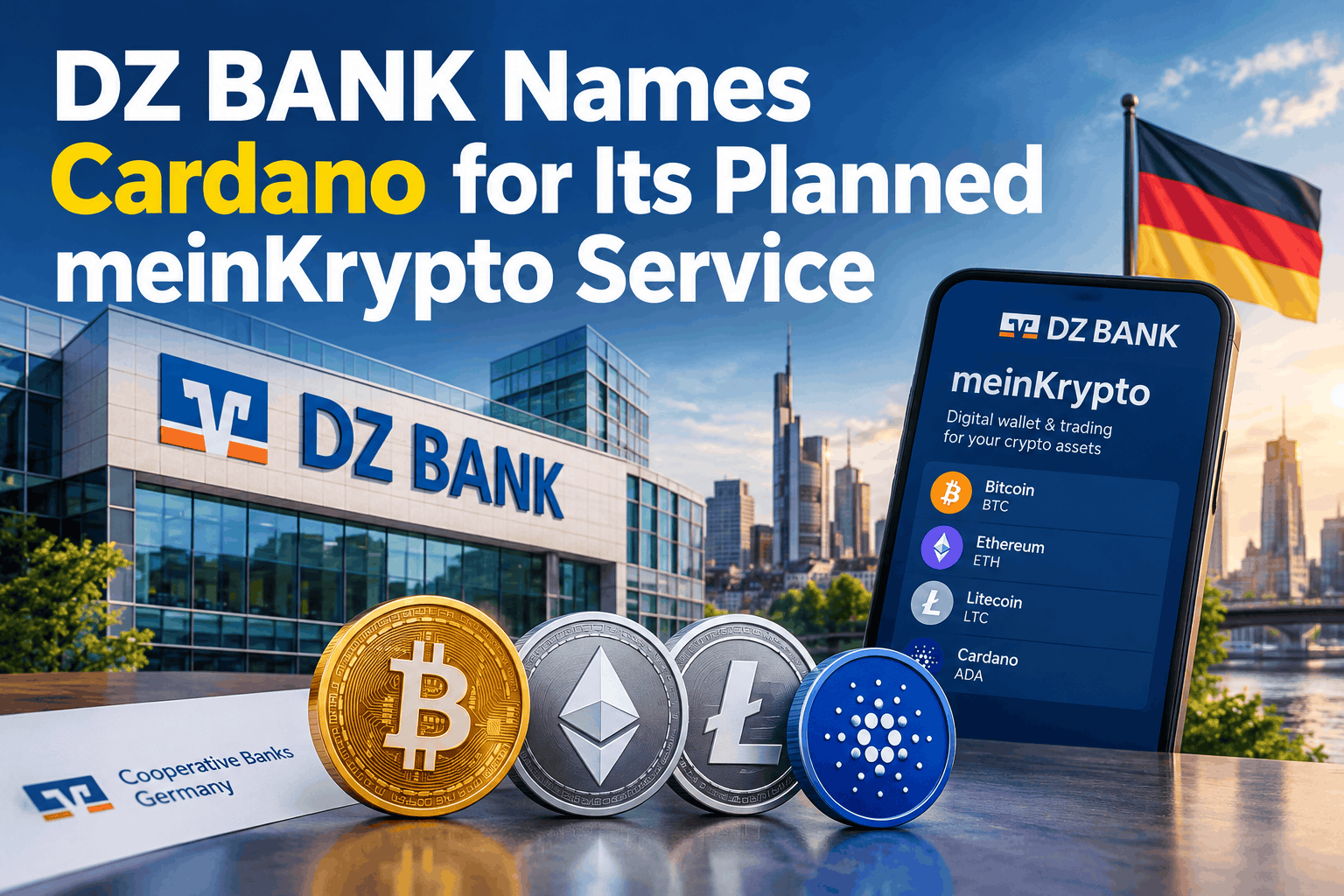
DZ BANK Names Cardano for Its Planned meinKrypto Service

3d ago

DZ BANK Names Cardano for Its Planned meinKrypto Service

Frankfurt, Germany — January 12, 2026 — DZ BANK said Cardano (ADA) would be one of four cryptocurrencies available at the start of meinKrypto, its planned digital wallet and trading service for customers of Germany’s cooperative banks. The announcement followed the bank’s receipt of a Markets in Crypto-Assets Regulation (MiCAR) authorization from German regulator BaFin to operate the platform. What DZ BANK announced DZ BANK said it received the authorization at the end of December 2025. Its January 12 press release named Bitcoin (BTC), Ethereum (ETH), Litecoin (LTC) and Cardano (ADA) as the assets planned for the service’s start. meinKrypto is designed as a wallet integrated into the VR Banking App. The announcement described a planned rollout, not immediate access for every customer. DZ BANK said the service would soon be made available to cooperative banks, which would then have to complete additional steps before customers could use it. Key facts The service is called meinKrypto and is intended for Germany’s cooperative financial network, including Volksbanken and Raiffeisenbanken. The four cryptocurrencies named for the start were Bitcoin, Ethereum, Litecoin and Cardano (ADA). Each cooperative bank would decide individually whether to introduce the service and would need to submit its own MiCAR notification to BaFin. DZ BANK said meinKrypto is for self-directed investors and is not part of its retail investment-advice service. How the rollout was structured The central authorization covered DZ BANK’s operation of meinKrypto. It did not, by itself, mean that every local cooperative bank had activated the service. DZ BANK said each Volksbank or Raiffeisenbank would need to make its own MiCAR notification to BaFin, implement the service and decide whether to offer it. CoinDesk also reported that meinKrypto was intended to be integrated into the VR Banking App and that participating institutions would have to complete their own regulatory notification before providing access to retail customers. Analysis and conclusion Including ADA in the planned asset list gives Cardano a route into a banking app used by customers of participating cooperative banks. The practical significance depends on which banks choose to offer meinKrypto and complete the required steps. The January announcement does not establish that ADA trading became available nationwide on that date. The listing is a product-availability decision, not a forecast for ADA’s price or a recommendation to buy it. DZ BANK described the service as self-directed and outside its retail advisory service. Readers should therefore distinguish regulated access to a cryptoasset from an endorsement of that asset or a guarantee about its value. FAQs Which cryptocurrencies did DZ BANK name for meinKrypto’s start? The January 12 announcement named Bitcoin (BTC), Ethereum (ETH), Litecoin (LTC) and Cardano (ADA). Did the authorization mean every cooperative-bank customer could immediately trade ADA? No. DZ BANK said individual Volksbanken and Raiffeisenbanken had to submit their own MiCAR notification to BaFin, implement the service and decide whether to offer it. The announcement did not set one nationwide activation date. Was meinKrypto described as investment advice? No. DZ BANK described it as a service for self-directed investors and said it was not part of retail investment advice. Does ADA’s inclusion mean DZ BANK expects its price to rise? The announcement makes no price prediction. It identifies ADA as one of the assets planned for the service; it does not describe the listing as a recommendation or assurance of future performance.

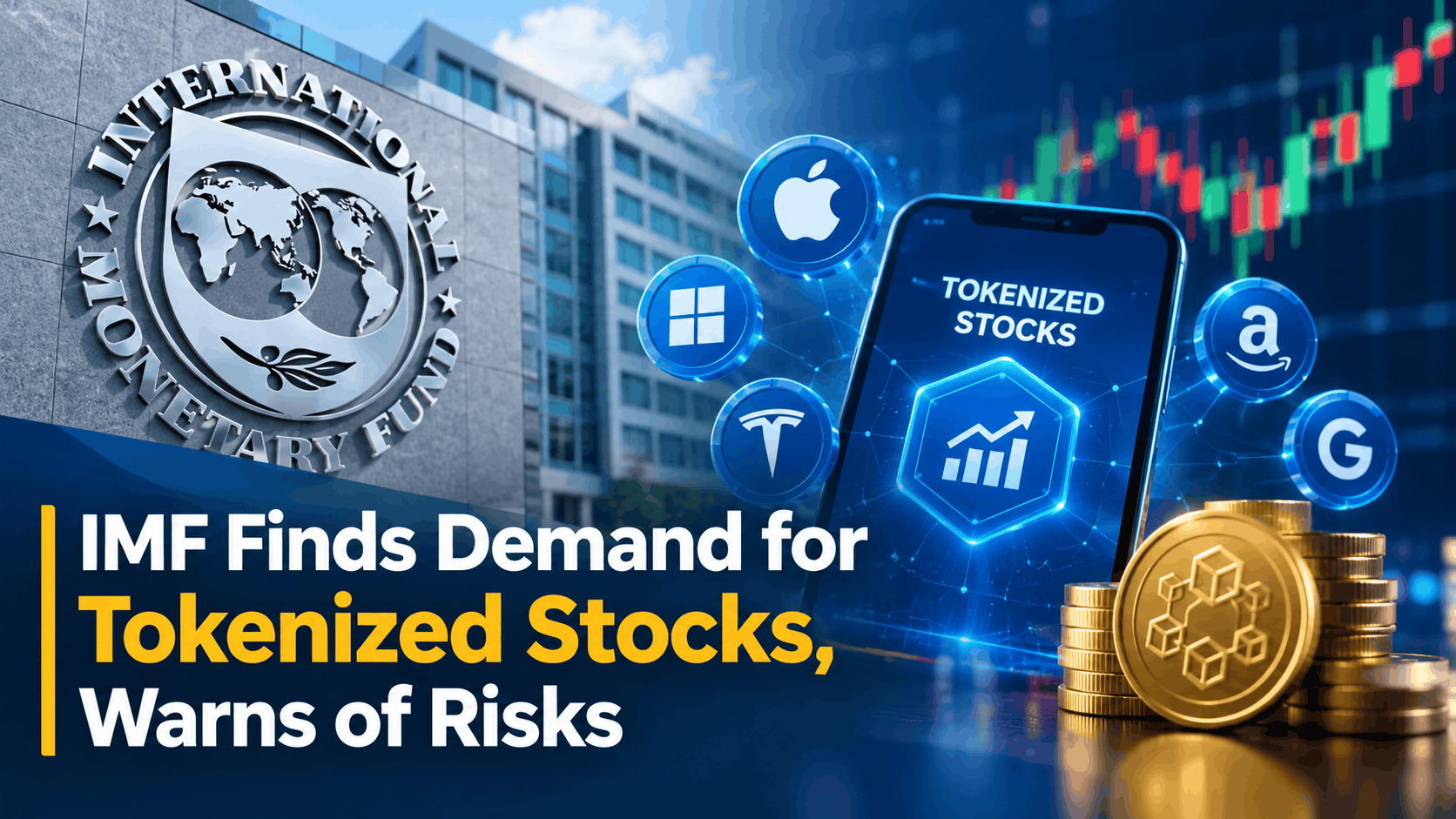
IMF Finds Demand for Tokenized Stocks, Warns of Risks

4d ago

IMF Finds Demand for Tokenized Stocks, Warns of Risks

IMF Finds Demand for Tokenized Stocks, Warns of Risks Washington, D.C. — October 8, 2026, The International Monetary Fund (IMF) says trading patterns in tokenized stocks point to investor interest in after-hours access and fractional shares, while these markets remain relatively illiquid, fragmented and more volatile than traditional stock markets. What the IMF found about tokenized stocks Tokenized stocks are digital tokens that represent equities on programmable ledgers. In a blog based on Chapter 3 of its October 2026 Global Financial Stability Report , the IMF said more than half of the tokenized-equity trading it examined happened outside traditional market hours. Around 80% of the trades were smaller than one share. The IMF said these patterns suggest investors value access around the clock and the ability to buy less than a full share. They show demand for some features of tokenization, even though the market is still small and developing. Trading access is growing faster than liquidity The IMF also said overnight returns in tokenized equities are reflected in traditional equity prices shortly after regular markets open. It said this suggests the two markets respond to similar information and that overnight price signals can be relevant to traditional trading. But the report says tokenized markets remain relatively illiquid and more volatile than their traditional counterparts. Trading is spread across separate platforms and networks, which can make it harder for buyers and sellers to meet and for prices to form efficiently. The IMF says this fragmentation can contribute to price differences across venues. IMF calls for safeguards as tokenized markets develop The IMF said tokenization could eventually make some financial processes faster and more automated. But it also warned that greater connections between platforms, leverage and round-the-clock activity could create new ways for market stress to spread, including through liquidity runs and forced asset sales. The IMF said policymakers should clarify the legal rights attached to tokenized assets, apply comparable rules to similar activities regardless of technology, support links between tokenized and traditional systems, and monitor risks as the market grows. The report does not set a timetable for these measures. Analysis The IMF’s findings suggest tokenized stocks are meeting some investor needs, especially after-hours access and fractional trading. But interest in these features does not yet mean the market is deep or stable. Fragmented platforms and thin liquidity may leave prices more volatile than those of traditional shares. The report points to legal clarity and better links between trading systems as important conditions for safer growth. If tokenized markets expand, their benefits could grow alongside risks such as liquidity stress and shocks spreading between platforms. For now, the IMF’s message is that market infrastructure and safeguards need to develop alongside demand. Frequently Asked Questions About Tokenized Stocks What are tokenized stocks? Tokenized stocks are digital tokens that represent stocks or equity interests, with ownership records maintained on a blockchain or similar digital ledger. Their legal structure and holder rights can vary. SEC Investor.gov explains tokenized securities . What did the IMF find about demand for tokenized stocks? The IMF reported that more than half of the tokenized-equity trading it examined occurred outside traditional market hours. Around 80% of the trades were smaller than one share—patterns the IMF said suggest interest in extended-hours access and fractional trading. Can tokenized stocks be traded outside regular market hours? Some tokenized-equity trading takes place outside traditional market hours, according to the IMF. Trading hours and availability depend on the specific product and platform, so check their terms. Do tokenized stocks always provide the same rights as regular shares? No. Rights depend on how a token is structured. The SEC describes issuer-sponsored and custodial models, as well as synthetic tokens that may provide price exposure without rights in the referenced company. Review the product’s disclosures to understand what the token represents. Are tokenized stocks more volatile or less liquid? The IMF says tokenized markets remain relatively illiquid and more volatile than traditional markets. It also warns that trading split across platforms and networks can weaken liquidity and affect price formation. The IMF discusses these market risks . Are tokenized stocks regulated by the SEC? In the United States, the SEC says tokenized securities remain subject to securities laws; changing the format in which a security is recorded does not by itself change how those laws apply. The rules and rights involved can depend on the product’s structure. What risks could grow as tokenized markets expand? The IMF warns that greater interconnectedness and leverage could create channels for financial stress to spread, including liquidity runs and forced asset sales. It recommends legal clarity, links between systems, and safeguards that keep pace with market growth.

Bitcoin’s 42.5% Q3 Rally Needs Stronger Spot Demand as ETF Inflows Slow, Futures Leverage Falls, Bitfinex Says

Oct 1, 2026

Bitcoin’s 42.5% Q3 Rally Needs Stronger Spot Demand as ETF Inflows Slow, Futures Leverage Falls, Bitfinex Says

Bitcoin’s 42.5% Q3 Rally Needs Stronger Spot Demand as ETF Inflows Slow, Futures Leverage Falls, Bitfinex Says Bitcoin October 1, 2026 — Bitcoin gained 42.5% in the third quarter, but Bitfinex says another sustained advance will need stronger spot demand, meaning purchases will be made directly in the market rather than through leveraged futures positions. What happened In its September 30 Bitfinex Alpha analysis, the exchange said Bitcoin was on course for its strongest quarter since the fourth quarter of 2024 and its second-strongest third quarter since 2013. Bitcoin opened the quarter at $58,585. The report said futures open interest, a measure of outstanding futures contracts, had fallen to its lowest level since March. Implied volatility was also near a one-year low, while exchange-traded fund (ETF) inflows had slowed to roughly the pace of new Bitcoin issuance. Why Bitcoin spot demand matters Bitfinex said lower leverage can reduce the risk of a sharp, liquidation-driven fall, but it does not create new buyers. In its assessment, the next sustained move must therefore be led by the spot market. Bitcoin-denominated futures open interest fell from more than 700,000 BTC on September 21 to 644,000 BTC on September 29. The October futures contract carried an annualized premium of 5.1%, reducing the incentive for some basis trades. Bitfinex said the $84,000–$86,500 cost-basis band contained about 1.39 million BTC, creating a significant area of potential selling near breakeven. ETF inflows continued but slowed Bitfinex said Bitcoin ETFs recorded nine consecutive sessions of inflows totaling $3.08 billion. However, its absorption-to-emission ratio fell from 25.6 times new issuance on September 21 to 1.8 times on September 29. The report said the ratio would need to recover toward five times, or about $190 million per day, to absorb the overhead supply between $84,000 and $86,500. Corporate buying remained positive in the report’s data. Bitfinex said Strategy bought 1,665 BTC at an average price of $85,681, while Strive added 1,107 BTC at an average price of $85,396. What a move above $85,000 could mean According to the analysis, Bitfinex said the $82,500–$84,000 cost-basis band grew from about 110,000 BTC on September 27 to 306,000 BTC on September 30, which it interpreted as spot buyers absorbing supply. A move above $85,000 would return the 760,000 BTC held between $84,000 and $85,000 to profit. Independent coverage by Crypto.news reported the same assessment: reduced leverage may limit liquidation risk, but it does not automatically provide the demand needed for a further rise. What happens next Bitfinex’s base case was for Bitcoin to build on the $82,500–$84,000 cost basis while $84,000–$86,500 capped advances until ETF absorption recovered. The report said a sustained move below $81,300, combined with ETF outflows, would change that view and bring the $77,000 True Market Mean into focus. These are Bitfinex’s market scenarios, not guaranteed outcomes.