



As of July 9, 2026
Introduction
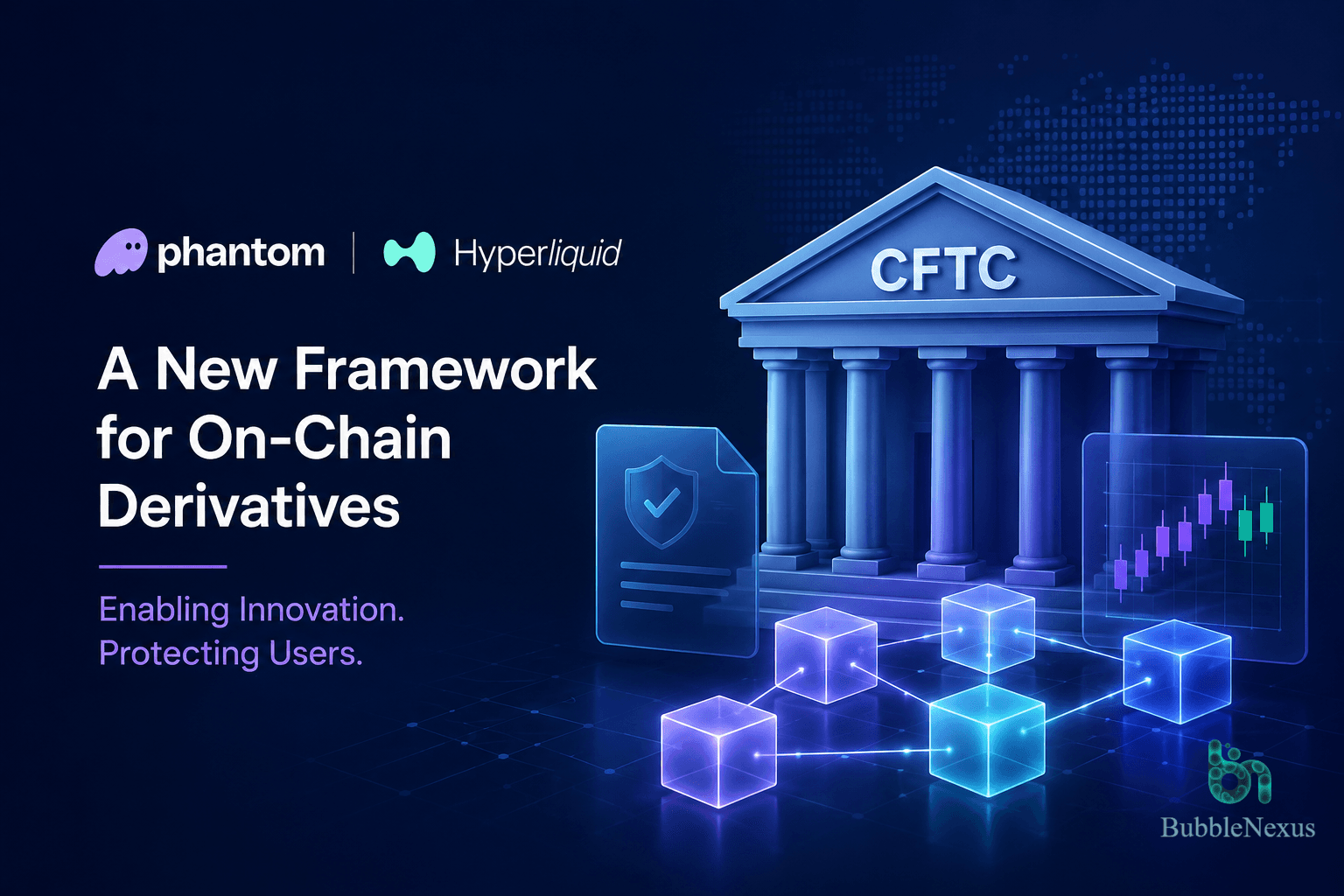
On July 9, 2026, Phantom Technologies and the Hyperliquid Policy Center (HPC) submitted a response to the CFTC's RFI, proposing a three-pronged roadmap for regulated on-chain derivatives markets in the U.S. This proposal could shape the future of DeFi regulation—here's what it means and why it matters.
Current CFTC rules were designed for centralized, custodial markets and do not accommodate on-chain models based on self-custody and automated risk management.
The Regulatory Context
Following President Trump's Executive Order 14405 (May 19, 2026), the CFTC issued an RFI on June 18, 2026, seeking ways to remove barriers to fintech innovation. The Phantom-HPC submission responds with practical recommendations to enable regulated on-chain markets.
CFTC
Commodity Futures Trading Commission

Hyperliquid
On-Chain Derivatives L1
The Three-Pronged Regulatory Roadmap
The Phantom-HPC proposal outlines a three-part roadmap to remove barriers to DeFi innovation while preserving consumer protection and market integrity.
Prong 1: Legal Certainty for Developers
Clarify that building or contributing to on-chain protocol software alone does not trigger CFTC registration, giving developers the legal certainty needed to innovate in the U.S.
Prong 2: Enable On-Chain Infrastructure
Allow regulated firms to use on-chain technology for trading, settlement, and risk management while maintaining regulatory oversight and customer protections.
Prong 3: Support Non-Custodial Providers
Extend the Phantom no-action relief to similar non-custodial wallet and interface providers, enabling regulated partnerships without unnecessary registration.
Bringing On-Chain Derivatives to U.S. Users
The Phantom-HPC submission is based on real-world efforts to bring on-chain derivatives to U.S. users. Phantom is a non-custodial wallet provider, while Hyperliquid is a high-performance Layer 1 blockchain for decentralized derivatives trading. Their integration enables direct access to on-chain perpetual futures from the Phantom wallet.

Phantom Wallet
(Non-custodial interface provider)
Hyperliquid
(On-chain derivatives platform)
Regulatory uncertainty currently limits this functionality for U.S. users. The Phantom-HPC proposal seeks to provide the clarity needed to enable transparent, non-custodial access to on-chain derivatives markets under U.S. oversight.
Key Arguments: Why This Regulatory Update Matters
1. Consumer Protection
On-chain protocols improve transparency, automate risk management, and let users control their own funds through self-custody.
2. Keeping Innovation in the U.S.
Clear rules can reduce offshore migration, expand U.S. market access, and strengthen fintech leadership.
3. Builds on Existing CFTC Policy
The proposal extends established CFTC precedent, including the Phantom No-Action Letter, to on-chain infrastructure.
4. Supports Executive Order 14405
The roadmap helps implement Executive Order 14405 by promoting fintech innovation while preserving market integrity.
The Regulatory Landscape: Timeline and Context
March 17, 2026: Phantom No-Action Letter
CFTC grants Phantom relief from IB registration for its non-custodial wallet.
May 19, 2026: Executive Order 14405
Directs federal agencies to remove barriers to responsible fintech innovation.
June 18, 2026: CFTC Request for Information
CFTC seeks industry input on regulations affecting fintech partnerships.
July 9, 2026: Phantom-HPC Submission
Phantom and HPC propose a roadmap for regulated on-chain derivatives markets.
Traditional vs. On-Chain Derivatives Markets
| Aspect | Traditional Custodial Model | On-Chain Model (Phantom-HPC Proposal) |
|---|---|---|
| Risk Management | Manual margin monitoring and liquidations | Automated by smart contracts |
| Settlement | T+2 or longer settlement | Instant on-chain settlement |
| Operational Overhead | High due to intermediaries | Low through protocol automation |
| Transparency | Limited intermediary reporting | Immutable on-chain records |
The Path Forward: Regulatory Implementation
Immediate Actions
Issue guidance confirming on-chain developers and non-custodial providers are not subject to registration.
Medium-Term Rulemaking
Clarify how regulated firms can use on-chain infrastructure for trading, settlement, and clearing.
Long-Term Framework
Create a comprehensive regulatory framework for decentralized derivatives markets.
Conclusion
The Phantom-HPC proposal provides a clear roadmap for responsible DeFi regulation, balancing innovation with consumer protection. By clarifying rules for on-chain infrastructure and non-custodial providers, the CFTC can bring innovation under U.S. oversight, expand market access, and strengthen America's leadership in financial technology.
Frequently Asked Questions (FAQs)
1. Does the Phantom-HPC proposal eliminate consumer protection?
No. It enhances consumer protection through transparency, automation, and user control. On-chain protocols provide immutable audit trails, reduce intermediary risk, and let users retain control of their private keys, often offering stronger protections than traditional custodians.
2. How does the proposal address regulatory oversight?
Regulated entities retain responsibility for market surveillance, enforcement, and emergency powers while using on-chain infrastructure for execution and settlement, preserving regulatory oversight and enabling innovation.
3. Why is this proposal important for American competitiveness?
Without updated rules, on-chain derivatives innovation will continue moving offshore. Updating the rules would bring innovation under U.S. oversight and help maintain U.S. leadership in financial technology.
4. What is the Phantom Letter, and how does it relate to this proposal?
The Phantom Letter is a March 2026 CFTC no-action letter exempting Phantom's non-custodial wallet from IB registration. This proposal would codify and extend that relief to similar fintech firms.
5. How does on-chain settlement differ from traditional settlement?
On-chain settlement is instant and intermediary-free, reducing operational risk and improving capital efficiency compared to traditional T+2 settlement.