



As of June 17, 2026
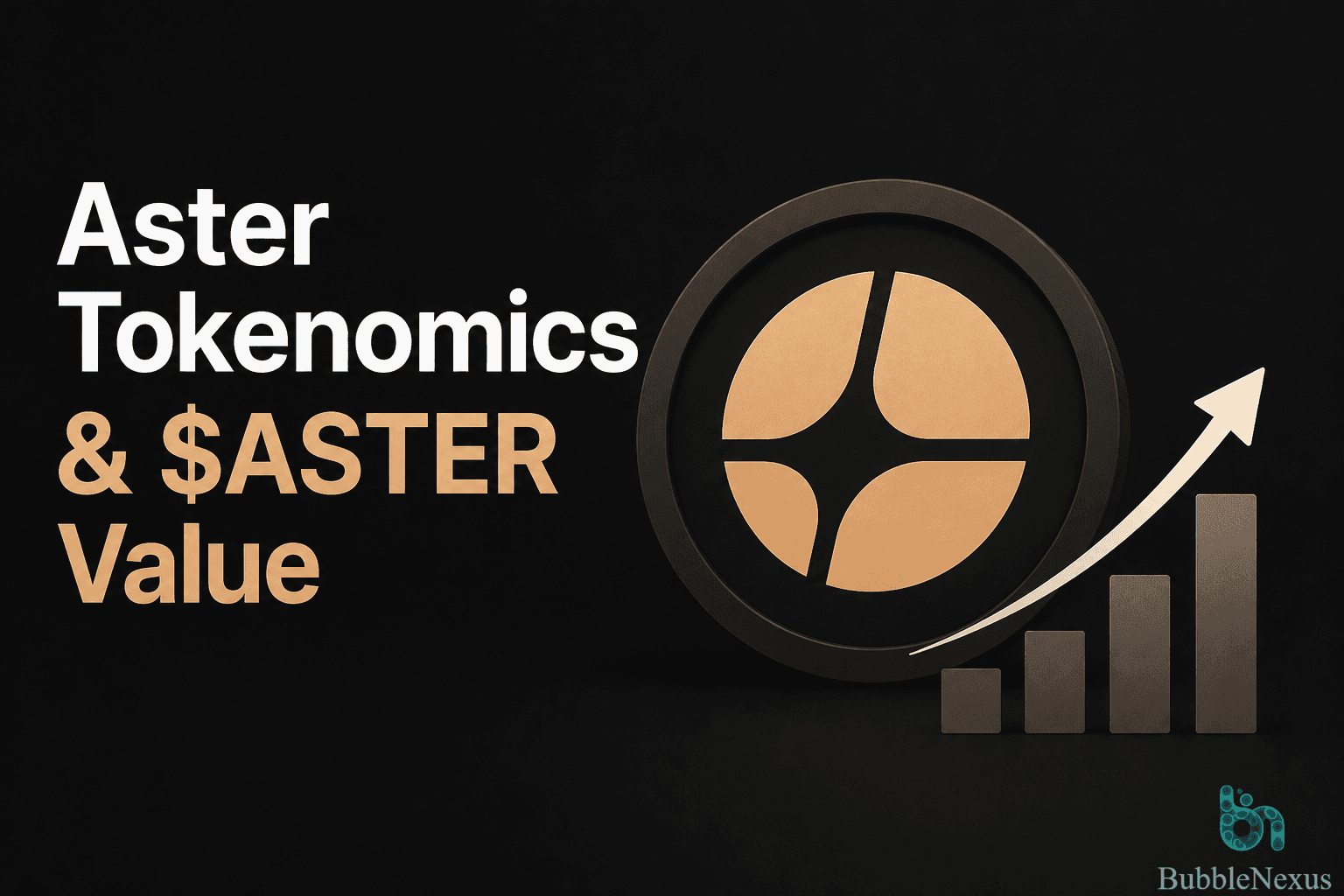
Aster has recently introduced major tokenomics upgrades designed to strengthen the long-term value of $ASTER. Through aggressive buybacks, supply reductions, staking incentives, and the launch of Aster Chain, the protocol is creating a more sustainable and value-accretive ecosystem for token holders.
Create sustainable demand while continuously reducing token supply through buybacks, staking incentives, and utility expansion.
Token Allocation & Distribution
| Category | Allocation | Details |
|---|---|---|
| Airdrop | 53.5% | 4.28B ASTER distributed over approximately seven years. |
| Ecosystem & Community | 30% | Staking rewards, liquidity, grants, and ecosystem growth. |
| Treasury | 7% | Governance-controlled reserves. |
| Team | 5% | Locked with cliff and gradual vesting schedule. |
| Liquidity & Listings | 4.5% | Exchange listings and liquidity provisioning. |
Major Tokenomics Upgrades
Daily platform fees automatically repurchase ASTER from the market.
Every token bought back is matched with an equivalent burn.
Monthly token emissions were reduced by approximately 97%.
ASTER now functions as a native gas and staking asset.
Enhanced Buyback & Burn Program
The June 2026 tokenomics upgrade introduced one of the most aggressive buyback systems in the sector. Under the new model, 99% of protocol fees are allocated to purchasing ASTER from the open market.
These tokens are distributed to veASTER stakers while an equal amount is burned from reserves, creating substantial long-term deflationary pressure.
Following the announcement, ASTER gained roughly 12% as investors responded positively to the stronger token value accrual model.
Emission Reduction
- 97% Lower Emissions: Aster reduced token emissions by approximately 97%, significantly decreasing the amount of new ASTER entering circulation.
- Staking-Focused Distribution: The previous unlock structure was replaced with a staking-based reward model that prioritizes active ecosystem participants.
- Reduced Inflation: Lower emissions help minimize inflationary pressure while encouraging long-term holding and staking.
Aster Chain Launch
- Expanded Utility: Aster Chain transformed ASTER from a governance token into the native asset of its own blockchain ecosystem.
- Gas Fee Payments: ASTER is now used to pay transaction fees across the Aster Chain network.
- Staking & Revenue Sharing: The token supports Layer-1 staking and protocol revenue-sharing mechanisms, creating additional sources of demand.
Potential Impact on $ASTER Value
- Reduced circulating supply through burns.
- Lower inflation from reduced emissions.
- Higher staking participation and token lockups.
- Additional demand from Aster Chain utility.
- Greater alignment between protocol growth and token value.
Future Risks
- Upcoming team and insider unlocks beginning September 2026.
- Dependence on sustained trading activity.
- Broader crypto market conditions.
- Execution risk for long-term tokenomics objectives.
Conclusion
Aster's tokenomics redesign represents a significant shift toward sustainable value creation. Through buybacks, burns, lower emissions, and expanded utility, the protocol has established a framework designed to strengthen long-term demand while reducing supply pressure.
Frequently Asked Questions (FAQs)
1. Why are ASTER buybacks important?
ASTER buybacks create direct market demand by purchasing tokens from the open market. Combined with the protocol's burn mechanism, they help reduce circulating supply and strengthen long-term value accrual for token holders.
2. How much were ASTER emissions reduced?
Aster reduced token emissions by approximately 97% after transitioning to a staking-focused reward model. This significantly lowers inflation while encouraging long-term participation in the ecosystem.
3. What role does Aster Chain play in ASTER's value?
Aster Chain expands the utility of ASTER by making it the network's native asset for gas fees, staking, and protocol revenue-sharing mechanisms, creating additional sources of demand beyond governance and trading incentives.
4. How does veASTER staking benefit holders?
veASTER stakers receive loyalty rewards funded by protocol buybacks, allowing long-term holders to directly benefit from platform growth and trading activity.
5. What risks should ASTER investors monitor?
Investors should monitor upcoming token unlocks, platform trading activity, overall market conditions, and the continued effectiveness of the buyback-and-burn mechanism in maintaining favorable supply-demand dynamics.