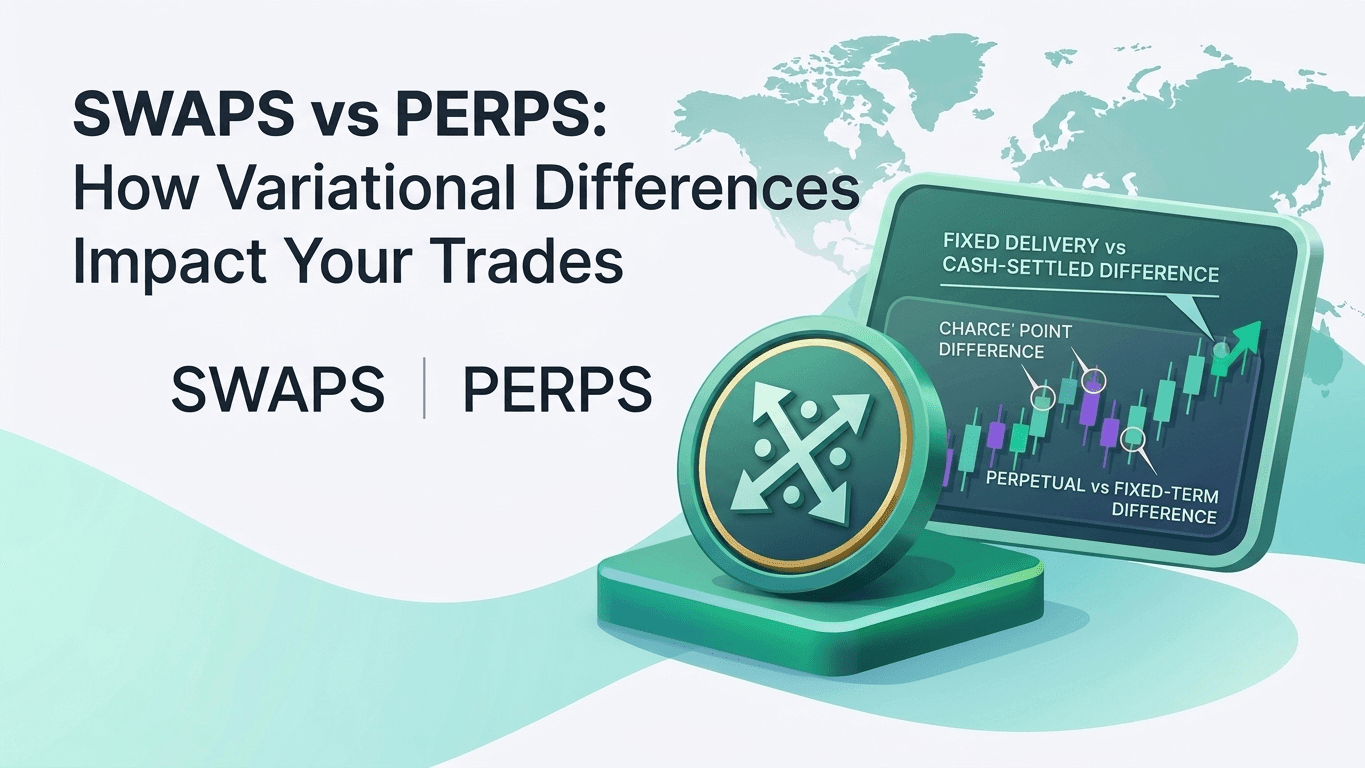
On Variational, both swaps and perpetual futures provide leveraged exposure to an underlying asset and settle in USDC. The main differences are how funding is calculated, where liquidity comes from, when markets are open, and which margin types are available.
Summary
Swaps are designed to track an asset’s total return and use funding based on traditional-market financing costs. Perpetual futures aim to keep their mark price close to the underlying index price and use funding that changes with market positioning.
- Swaps: More predictable funding, TradFi liquidity, and initially limited trading hours.
- Perpetuals: Variable funding, crypto-native liquidity, and 24/7 trading.
- Both: Offer leverage, are perpetual instruments, and settle in USDC.

How do swaps and perps differ?
The instrument you choose affects the cost of holding a position and the times when you can manage it.
| Feature | Swaps | Perpetual Futures |
|---|---|---|
| Primary objective | Track the total return of the underlying asset | Keep the mark price close to the index price |
| Funding | Based on traditional-market financing costs | Based mainly on the premium between mark and index prices |
| Liquidity source | Traditional financial institutions | Crypto exchanges and crypto-native liquidity |
| Trading schedule | Initially follows set market hours | Trades 24/7 |
| Margin | Isolated margin while markets have set hours | Isolated or cross margin |
How does funding affect the trade?
Funding is one of the most important differences because it changes the cost of holding a leveraged position.
Swap funding is applied daily and is linked to the real cost of financing the underlying market. For equity indices, this can be based on the overnight interest rate of the relevant currency, adjusted by a spread. Swap rates are generally more stable, although they can be asymmetric and may change with market conditions.
Perpetual funding is calculated from the relationship between the contract’s mark price and the underlying index price. A positive funding rate means longs pay shorts. A negative rate means shorts pay longs. Because the rate responds to market positioning, it can change quickly.
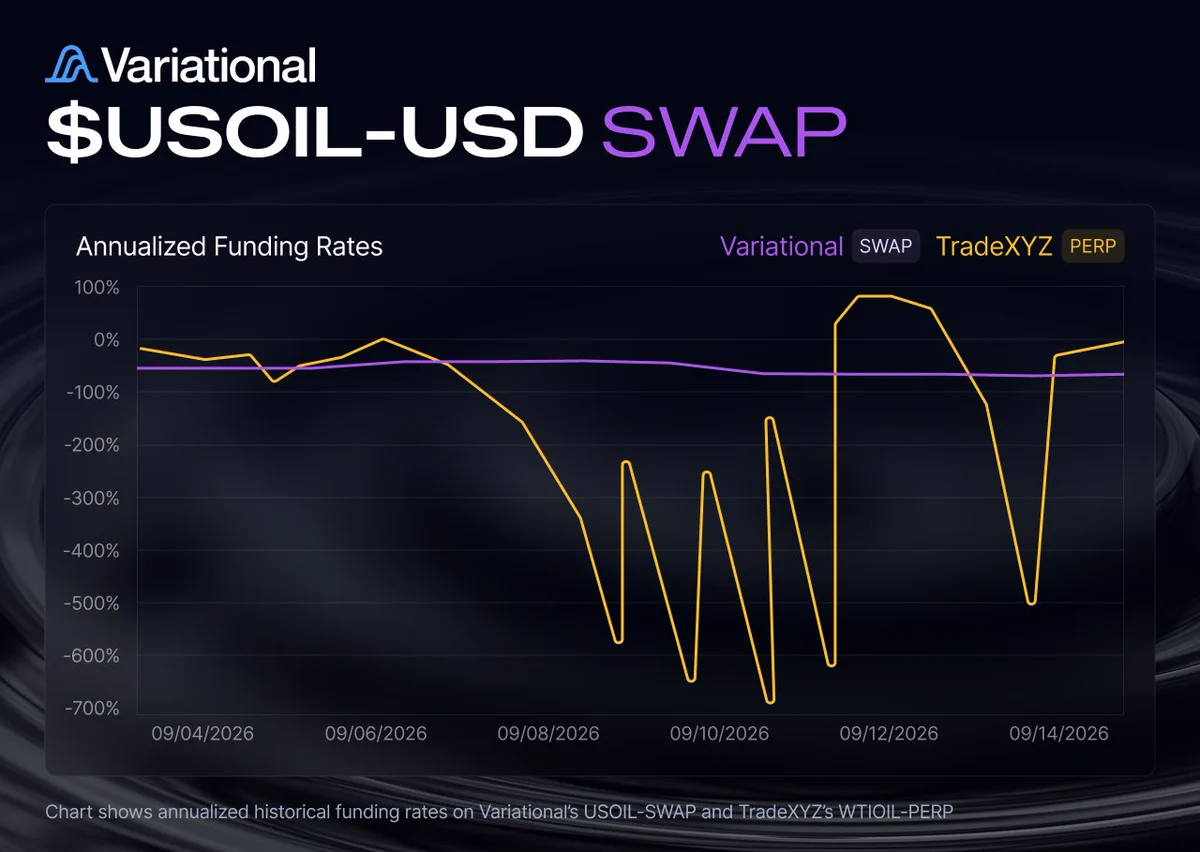 Source: Variational X Post
Key point: A swap may be easier to budget for when holding a position, while a perp may offer more flexible 24/7 trading but less predictable funding.
When should a trader compare the two?
Compare the products before entering a position, especially if you expect to hold it for more than a short period.
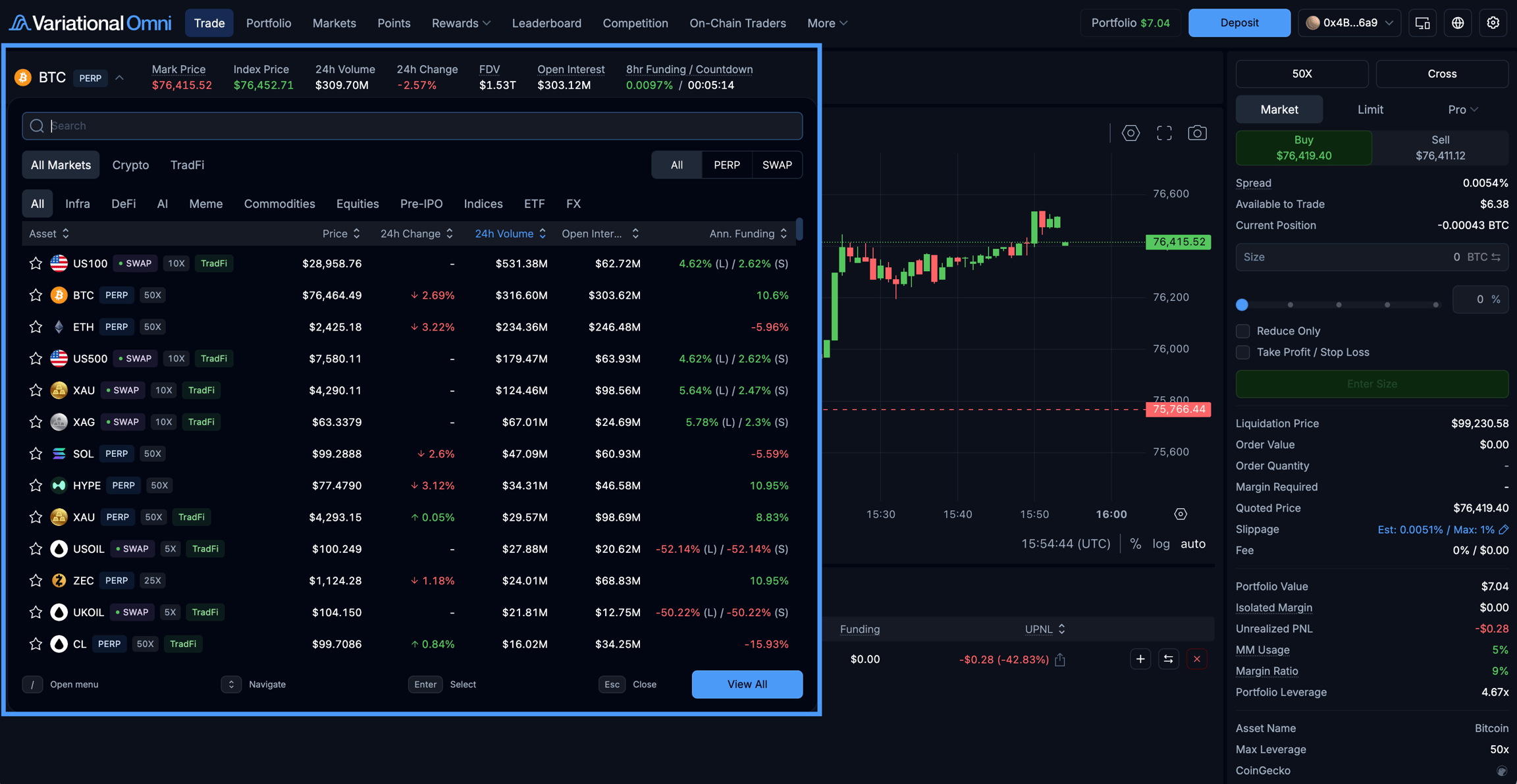 Source: Omni Variational Trade
- Choose based on the funding model, not only the leverage shown.
- Check whether the market is open before relying on a swap for active management.
- Review whether isolated or cross margin fits the position.
- For perps, monitor funding because it can affect returns while the position remains open.
- For swaps, check the daily funding schedule, including any weekend or holiday adjustment.
Which product fits your trading plan?
Swaps and perps are not interchangeable in practice. Swaps focus on total-return tracking and traditional financing costs, while perps focus on price tracking, continuous trading, and market-driven funding. The better choice depends on your expected holding period, need for 24/7 access, margin preference, and tolerance for changing funding costs.
Frequently Asked Questions (FAQs)
Q: What is the main difference between swaps and perpetual futures on Variational?
A: Swaps are designed to track the total return of an underlying asset, while perpetual futures aim to keep their mark price close to the underlying index price.
Q: How does funding differ between swaps and perpetual futures?
A: Swap funding is based on traditional-market financing costs. Perpetual funding is based on the relationship between the contract’s mark price and index price and can change with market positioning.
Q: Do swaps and perpetual futures trade 24/7 on Variational?
A: Perpetual futures trade 24/7. Swaps initially operate during set market hours, although Variational says trading hours may expand over time.
Q: What type of margin is available for swaps and perpetual futures?
A: Swaps currently support isolated margin while they operate with set trading hours. Perpetual futures support both isolated and cross margin.
Q: Do swaps and perpetual futures settle in the same asset?
A: Yes. Both instruments settle in USDC and provide leveraged exposure to an underlying asset.
Disclaimer: The information provided on this blog is for informational and educational purposes only and does not constitute financial, investment, legal, or tax advice.